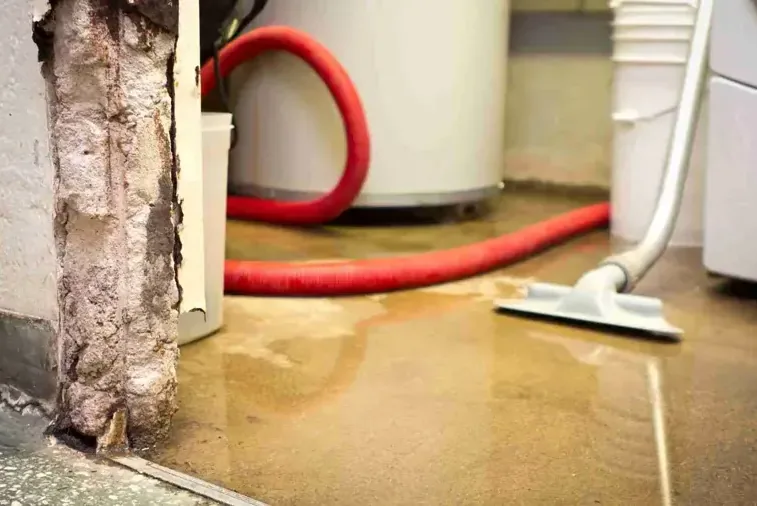
A tank failure can put a lot of water on the floor, and a slow weep at a fitting can soak a closet wall for weeks. The first moves are the same either way: close the cold water valve to the tank, cut the power or gas, and get the crew started on extraction.
Where the water goes
Garage slabs let water spread thin, while a closet inside a finished space pushes it into baseboards, carpet and the room next door. Attached homes add the risk of water crossing a shared wall or floor, so the leak path matters as much as the puddle. Drying then follows the steps under structural drying.
What gets removed
- Wet carpet and pad around the tank
- Flooring that cups, swells or lifts
- Drywall cut back above the waterline
- Baseboards pulled so walls can dry behind them
After the tank is replaced
A plumber replaces the tank, but the drying has to finish first. Drywall closed over wet studs holds moisture against the wall, and wet subfloor can smell long after the new heater is running. Readings show when the structure is ready to close. A slow leak from a washer is a similar case, covered under appliance leak water damage.
Keep the old tank, the model plate and the replacement receipt, along with photos of the leak path, because an adjuster may want to see how the failure happened.