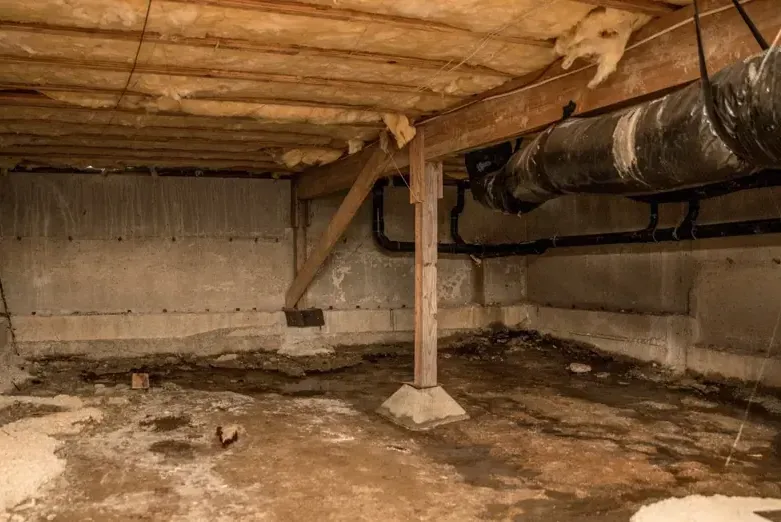
Water under the house

Crawl Space Water Removal in Mount Laurel, NJ

Water under the floor stays out of sight while it soaks insulation, joists and subfloor. The extraction crew pumps it off the vapor barrier and the drying team dries the framing from below until the readings say dry.

(888) 471-9821Water under the house? Call for a pump-out.
Pumps sized for tight access Joist and subfloor readings Wet insulation removed
Standing water in a crawl space beneath a raised floor
This loss at a glance
Water category1 to 3, set by the source
Main gearSubmersible pumps
Typical drying4 to 8 days
Drying standardIICRC S500
First moves

Crawl Space Water Removal: what to do before the crew arrives

  1. 1
    Stop any pipe leak

    Close the main valve if water is coming from a supply pipe under the floor.

  2. 2
    Stay out of the space

    Crawl space water can hide live wiring and sewage. Leave the climbing to the crew.

  3. 3
    Check the floors above

    Note soft spots, cupping in hardwood or a musty smell in the rooms above.

  4. 4
    Photograph from the hatch

    Shoot the water from the access opening without climbing in.

Order of the work

How crawl space water removal is handled in Mount Laurel, NJ

Measure, extract, dry, verify: skipping a step is how hidden moisture ends up sealed inside a wall.

  1. 1

    Pump and inspect

    Water comes off the barrier and the source gets found: pipe, drain or groundwater.

  2. 2

    Strip what is wet

    Soaked insulation and damaged barrier come out in bags through the hatch.

  3. 3

    Close and dry

    Vents get closed, and a dehumidifier and air movers dry the framing from below.

  4. 4

    Read the wood

    Joist and subfloor readings get logged until they match a dry reference.

Typical cost ranges

What does crawl space water removal cost in Mount Laurel, NJ?

In the township, crawl space water removal typically runs $1,500 to $12,000, depending on how much water pooled, the source, how much insulation and barrier must come out and how long drying runs.

Small pipe leak, clean water

$1,500 to $3,500
  • Pump-out
  • Barrier dried or patched
  • Joist readings

Insulation and barrier soaked

$3,500 to $7,000
  • Insulation removal
  • Barrier removal
  • Dehumidifier drying

Groundwater or sewage under the house

$7,000 to $12,000+
  • Category 3 protocol
  • Antimicrobial
  • Extended drying

Ranges move with the water category, the square footage, the material class and how fast drying started. For a planning number, run the water damage cost calculator.

A crawl space floods from below or from above: groundwater and storm runoff through the foundation walls and vents, or a supply pipe, drain or water heater leaking through the floor. Either way the water pools on the vapor barrier, soaks the fiberglass between the joists and raises the humidity of the whole house.

What gets removed and what gets dried

  • Standing water pumped off the vapor barrier
  • Fiberglass insulation that sagged or soaked, bagged and removed
  • A torn or contaminated vapor barrier pulled out
  • Joists, sill plates and subfloor dried in place with air movers and a dehumidifier

Why crawl spaces dry slowly

The space is tight, cool and damp to begin with, so the drying team usually closes the vents and works it as a sealed drying chamber with a dehumidifier. Readings on the joists and subfloor, not the feel of the air, decide when the equipment leaves.

Frozen pipes and crawl spaces

Supply pipes that run through a crawl space are among the first to freeze in a January cold snap, and a split there can run for hours before anyone notices. The Ready.gov winter weather page covers pipe protection, and EPA indoor air guidance explains why damp air under the house matters upstairs.

When the cold is the cause, see frozen pipe water damage.

Service area

Crawl space water removal across the township and nearby towns

Burlington County, ZIP 08054

The restoration team covers ZIP 08054 across the township, from Rancocas Woods and Ramblewood to Birchfield, Pine Grove, Heulings Hill, Fellowship and the homes off Union Mill Road and Hartford Road.

Nearby coverage takes in Moorestown, Maple Shade, Cherry Hill, Evesham Township, Hainesport, Lumberton.

Every section and town covered

Questions

Crawl Space Water Removal questions in Mount Laurel, NJ

How do I know there is water in my crawl space?

Common signs are a musty smell in the house, cupping or soft spots in the floor above, higher humidity indoors and, when a pipe is leaking, a higher water bill.

Does wet insulation have to be replaced?

Fiberglass that soaked through or sags between the joists usually comes out, because it holds water against the wood and does not dry well in place.

Can the crawl space dry with the vents open?

Open vents bring in humid outside air for much of the year. The drying team usually closes them and dries the space as a sealed chamber with a dehumidifier.

How long does crawl space drying take?

Usually four to eight days. Wet joists and subfloor take longer than open rooms, and readings decide when the equipment comes out.

Is crawl space water damage covered by insurance?

A sudden pipe break under the floor is often covered. Groundwater seepage and flooding usually are not without flood coverage. Coverage depends on your policy, so check with your own insurer.

Why does the floor above smell after a leak under the house?

Damp air rises from the crawl space into the rooms above. Removing wet materials and drying the framing is what clears it.

Water in the house right now

Water in the crawl space? Get it pumped and dried now.

Wet insulation and joists hold moisture against the floor above. Removal and sealed-chamber drying stop it.

(888) 471-9821Get the crawl space pumped out
(888) 471-9821 flood & leak help