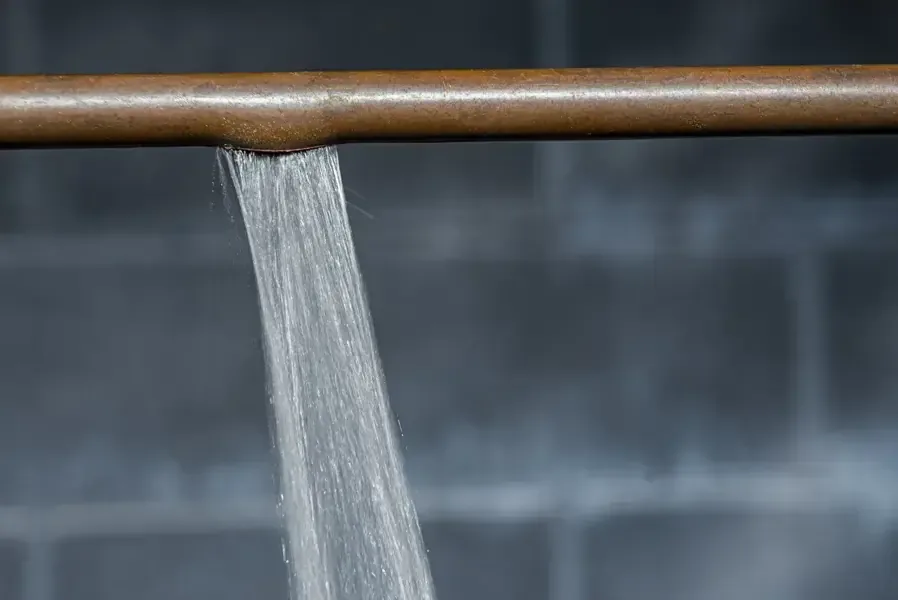
Most homes in the township were plumbed between the late 1960s and 1990, and supply pipe, fittings and shutoff valves that old wear out. A pinhole in copper, a cracked fitting or a split from a hard freeze can release hundreds of gallons before the main is closed, and the water runs down inside the wall where nobody sees it.
Finding all the water
Water from a burst pipe travels along studs, plates and joists before it shows up as a stain. The tech who does the walkthrough traces it with thermal imaging and pinless meters, then marks the wet area on the moisture map before any drywall is cut.
How a wet wall cavity gets dried
- Drywall cut back only where readings show it is wet, or where it sagged
- Wet insulation removed from the cavity
- Air movers and wall cavity drying systems pushing dry air into the stud bays
- LGR dehumidifiers pulling the moisture out of the room
Clean water caught within a day or two often lets the drying team save most of the drywall and the subfloor.
Before the plumber and after
The plumber fixes the pipe; the restoration team handles the water it released. EPA WaterSense leak tips cover the small drips worth fixing early, and Ready.gov winter weather advice covers the cold behind many splits.
When the break followed a freeze, see frozen pipe water damage.