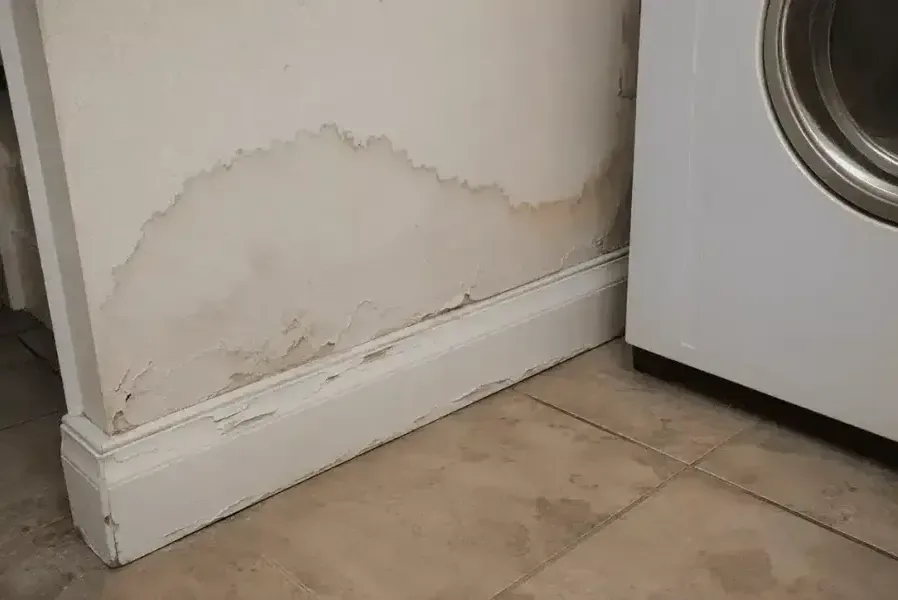
Appliance leaks are quiet. A cracked washer hose or a failing dishwasher seal drips behind a machine, soaks the toe kick and wicks into cabinet bases long before a puddle forms. By then, the damage is already under the flooring.
Renters, owners and associations
The borough has 939 renter-occupied homes, plus condominium and apartment buildings, so an appliance leak can reach neighbors and may involve a landlord or an association. Photographs and a written drying record help sort out who covers what.
Where the water hides
- Behind the toe kick and under dishwasher and sink bases
- Beneath vinyl, laminate or hardwood that still looks fine
- Inside the subfloor, where moisture lingers
- In the ceiling below an upstairs laundry or bathroom
Drying behind the finish
Cabinet bases and flooring are the main targets. Small holes and injection drying move air under hard surfaces, mats pull moisture from hardwood, and swollen laminate is usually replaced. Water heaters leak in a similar way, covered under water heater leak cleanup.
Leaks that cross a shared wall are handled under townhome and condo water damage, where records for each unit are kept apart. Keep the supply hose that failed, because the model and install date help the claim.