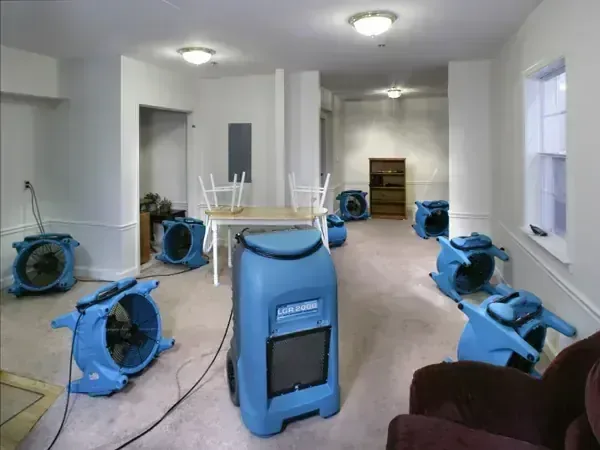
Drying is a matter of three variables: moisture in the material, the temperature of the air, and how much water that air can hold. The drying team measures all three, places equipment to carry humidity out of the building, and adjusts every day until the structure reads dry. Wet material left behind stays a risk for odor and decay.
Records in a flood zone
For a property in a mapped flood zone, the borough's Flood Damage Prevention Ordinance treats repairs that reach 50 percent of a structure's market value within a 10-year period as substantial improvement. Drying logs and repair estimates kept together make that math easier to show to the Construction Office.
What the logs show
- Material moisture at marked spots, recorded every visit
- Air temperature and relative humidity inside and outside
- Grains per pound, the measure of water held in the air
- Equipment counts and placements, so every change is traceable
When the equipment comes out
Equipment leaves when the wettest points match a dry reference taken from the same material. Hardwood, plaster and block take longer than carpet or drywall, so the schedule follows the readings and not a calendar. Hardwood is dried with floor mat systems, while block and plaster often need desiccant units.
Both water extraction and basement flooding cleanup hand off to this phase with baseline readings in the file.