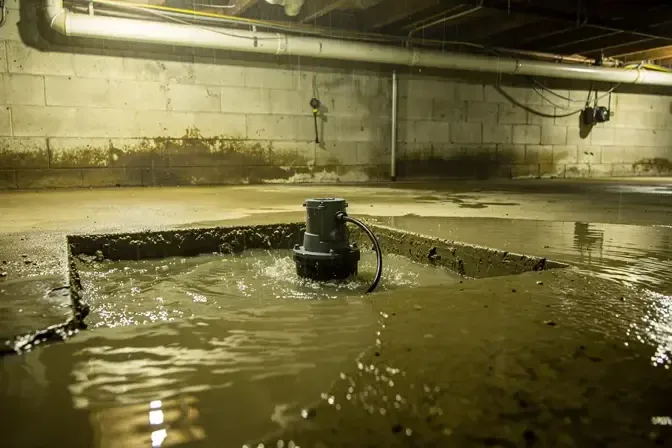
Basement water usually arrives one of three ways: groundwater pushing up through the floor and wall joints after long rain, a sump pump that stopped, or a supply pipe or water heater failing inside the room. The source sets the water category, and the category sets how much of a finished basement can be kept.
Why basements take longer to dry
Concrete block and poured walls soak up water and give it back slowly, and the air below grade is cool, which slows evaporation. The drying team often adds desiccant dehumidifiers to the LGR units and drills small holes at the base of finished walls so dry air reaches the cavity.
What a finished basement usually loses
- Carpet pad, almost always, once it has soaked
- The carpet itself when the water was Category 2 or 3
- Drywall and insulation up to a flood cut above the wet mark
- Particleboard vanities and cabinet bases that swell
Tile, sealed concrete, metal studs and most furniture on legs can usually be cleaned and dried.
Groundwater, flood water and coverage
Water that came through the foundation from saturated ground or surface flooding is treated differently by insurers than a burst pipe. FloodSmart.gov explains what a flood policy covers below grade, and the Ready.gov flood page covers safety before anyone steps into a flooded basement.
If the pit was the cause, see sump pump failure water damage.