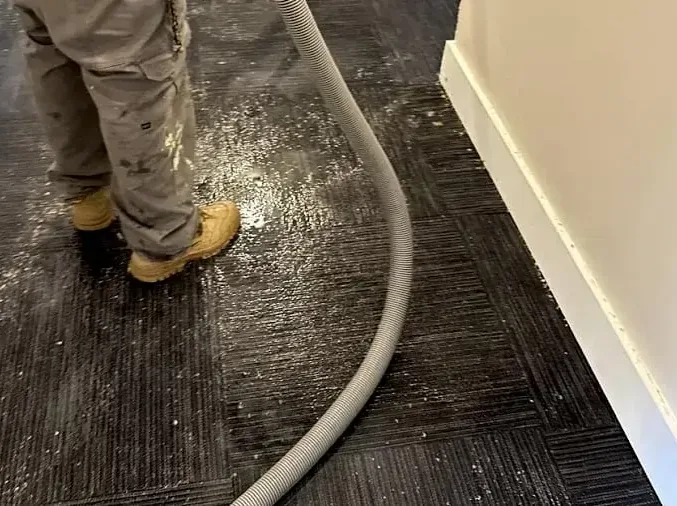
Extraction is the cheapest drying there is. Pulling a gallon out as liquid takes minutes, while evaporating that same gallon out of carpet pad and drywall takes days of air movers and dehumidifiers. That is why the extraction crew works before any drying equipment goes down, whether the water came from a split pipe, a sump pit or heavy rain on the Rancocas side.
How standing water gets pulled out
The tech who does the walkthrough first confirms the source is stopped and sets the water category, because that decides what can be saved.
- Truck-mounted extraction for large areas, with the water discharged outside the house
- Portable units and submersible pumps for basements, crawl spaces and upper floors the hoses cannot reach
- Weighted extraction tools that squeeze water out of carpet and pad
- Squeegee and wet vacuum passes on tile, vinyl and sealed concrete
What stays and what comes out
Clean water caught early can often be extracted and dried in place, carpet included. Pad usually comes out once it has soaked for a day or more. Category 3 water from sewage or creek flooding changes the plan: porous materials it touched are removed, not extracted and dried.
Damp materials left behind feed odor and growth later, which the EPA indoor air quality pages explain in plain terms.
After the water is out
Extraction is step two of five. The drying team then maps what is still wet, sets air movers and LGR dehumidifiers and logs readings daily until the materials reach the goal on the structural drying side.
If the water rose from a creek or a storm, Ready.gov flood safety advice covers what to check before anyone walks back into a flooded room.