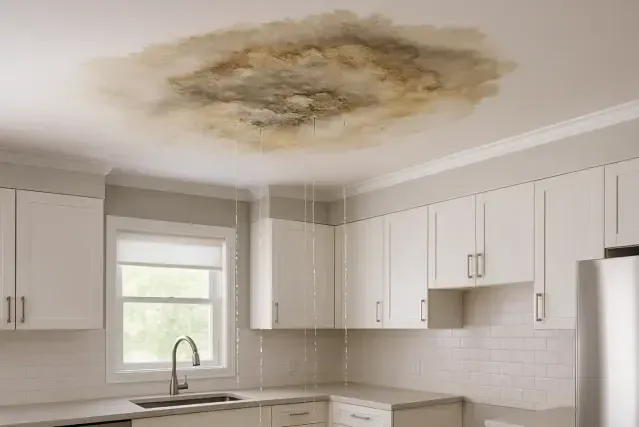
Two-story colonials, split-levels and stacked townhomes put bathrooms right over living rooms and kitchens. A failed wax ring, a cracked tub drain, a leaking shower pan or a supply pipe in the floor can drip for weeks before a stain shows, or let go all at once and bring the ceiling down.
Electrical safety comes first
Water in a ceiling finds light fixtures, ceiling fans and the wiring that runs through the joists. The response team has power to the wet area shut off before anyone opens the ceiling, and fixtures get checked before they are used again.
Opening and drying a ceiling
- Small holes drilled to drain a bulging ceiling under control
- Drywall that sagged or stays wet on the meter cut out in clean sections
- Wet insulation in the joist bays removed
- Air movers and LGR dehumidifiers drying the bays and the subfloor above
Gray water from a toilet or a drain changes the plan: drywall and insulation it soaked come out rather than being dried.
Finding the source
The tech who does the walkthrough runs water upstairs, checks the toilet base, the tub and the shower with meters and thermal imaging, and marks the source for the plumber. EPA WaterSense lists the slow leaks worth fixing early, and the Consumer Product Safety Commission covers electrical hazards in the home.
When the water came through the roof instead, see roof leak water damage.