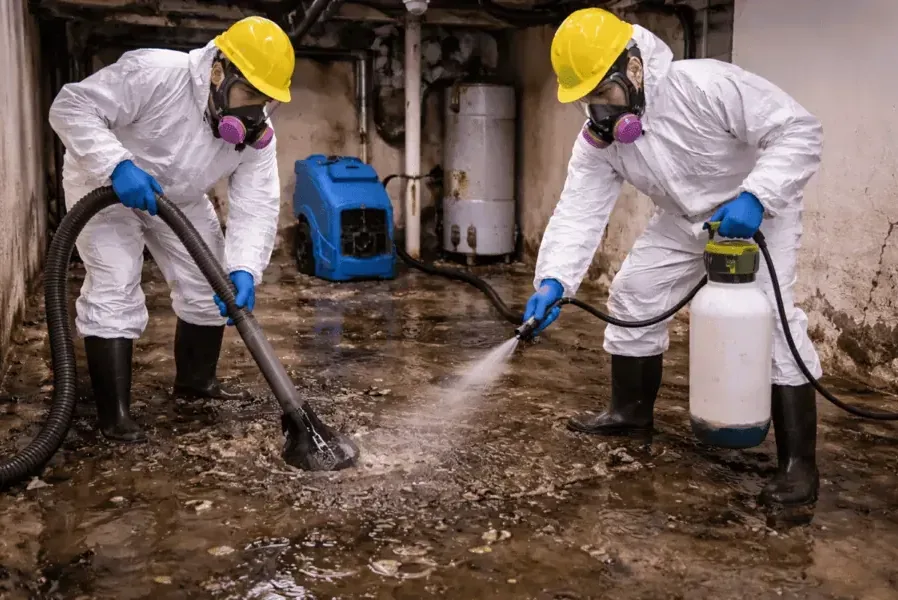
Sewage shows up at the lowest drain in the house: a basement floor drain, a lower-level toilet or a laundry tub. Most backups start in the private sewer lateral between the house and the main, where roots, grease and aging pipe catch what goes down the drain, and very heavy rain can push water back up as well.
What Category 3 cleanup requires
- PPE in the work area: gloves, eye protection, respirators and suits
- Containment with plastic sheeting and negative air through HEPA air scrubbers
- Removal of porous materials the sewage touched: carpet, pad, drywall to the wick line, insulation
- Hard surfaces cleaned, then treated with an EPA-registered antimicrobial at its labeled dwell time
Basements and laundry areas
Many homes here have their lowest drain in a basement or a lower-level laundry area, so sewage spreads across a slab and into finished walls. The response team stops fixture use upstairs first, then contains the lower level so contaminated air does not move through the house.
After the cleanup
A plumber clears or repairs the lateral, often after a camera inspection, and the restoration file records what was removed and treated. The EPA overview of sanitary sewer overflows explains why backups happen, and OSHA guidance on flood and sewage hazards covers the health risks.
If storm water came in with it, see storm and creek flood cleanup.