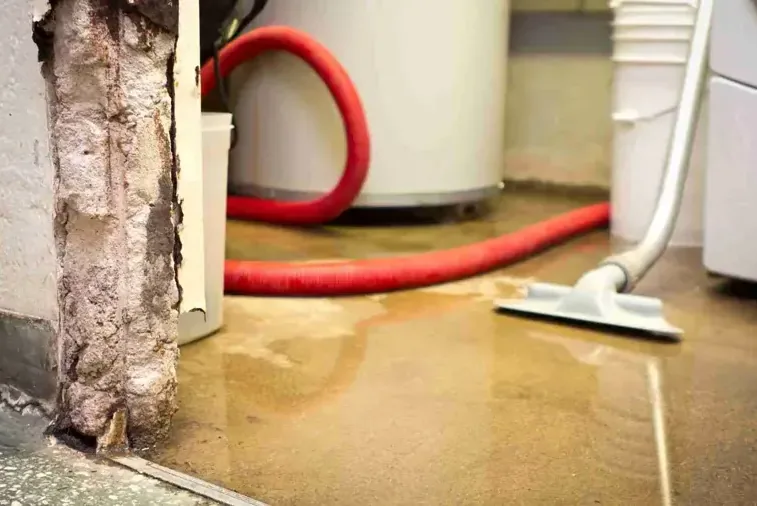
Water heaters fail at the tank, the relief valve or the fittings, and the water often runs for a long time before it is noticed because the heater sits in a closet, a utility room or a corner of a lower level. A slow leak can soak flooring and the base of walls long before a puddle spreads into view.
Shut off the supply first
The cold water supply to the tank should be closed first, which limits the damage. Replacing a water heater is a permitted job in the borough, and the construction fee schedule in Chapter 135 lists a water heater permit item.
What the crew removes
- Standing water from the floor and the pan
- Wet flooring and padding around the tank
- Lower drywall that has wicked water upward
- Insulation or stored items that are soaked
Drying the closet and beyond
Small closets trap moisture, so the crew opens louvered doors or removes the base trim to get air moving. Dehumidifiers and air movers run until the floor, the wall base and the neighboring rooms read normal, with the tank replacement scheduled around the drying.
Failures on an upper floor can drip into the ceiling below, which is covered in ceiling leak water damage. Slower leaks that went unnoticed are dried under structural drying.