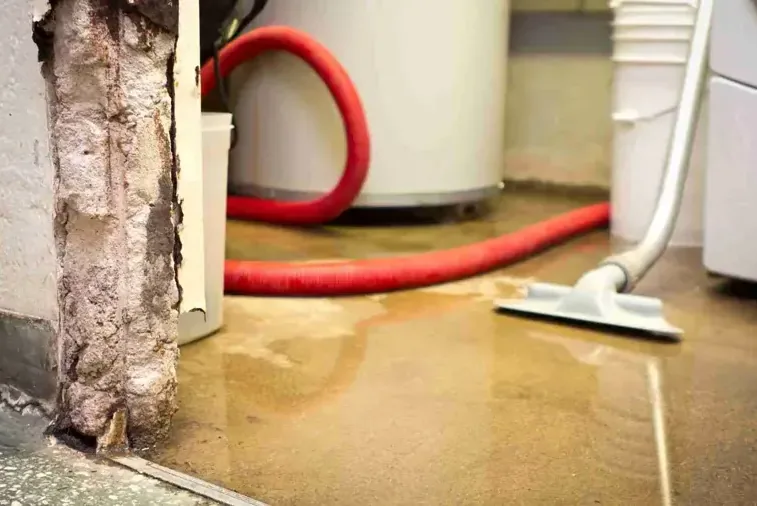
Tank water heaters usually last about 8 to 12 years, and many homes in the township keep one in a finished basement, a first-floor utility closet or the garage. A tank that rusts through leaks slowly at first, then all at once, and a failed relief valve or a loose supply fitting can run until the cold-water valve is closed.
Where the water goes
- In a finished basement: carpet, pad and the bottom of nearby drywall
- In a utility closet: the subfloor under the tank and the hallway flooring
- In a garage: under the wall into the next room
- In a townhome: through the floor to the unit below
Shut it down the right way
Close the cold-water valve on top of the tank, set the gas control to off or switch off the breaker for an electric tank, and keep away from hot water spraying from the relief valve. Draining the tank is plumbing work; the restoration team deals with the water already on the floor.
The CPSC recall list is worth checking for the model, and EPA WaterSense covers efficient replacements.
Drying around the tank
Wet drywall near the tank usually gets a flood cut, carpet pad comes out, and the slab or subfloor dries with air movers and LGR dehumidifiers. Damage under a tank that leaked for weeks gets photographed, because slow leaks are treated differently on a claim than sudden ones.
For other pipe failures, see burst pipe water damage.