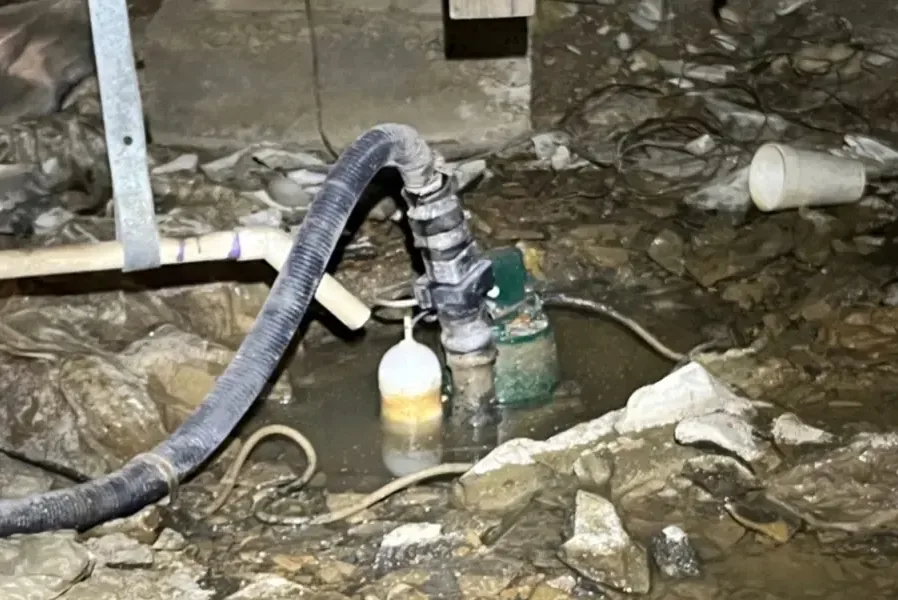
A sump pit collects groundwater from the drain tile around the foundation and pumps it outside. When the pump stops, the pit fills and spills across the floor. In parts of the township the stakes are higher: the county hazard plan names Ramblewood and the Country Side section for battery backup sump pumps, and the Ramblewood underdrain system itself depends on pumps.
Why pump failures happen in storms
- Power outages during thunderstorms, nor'easters and winter storms, the hours the pump is needed most
- A float switch that sticks against the pit wall or on debris
- A motor worn out after years of short cycling
- A frozen or blocked discharge pipe outside the house
Winter Storm Quinn in March 2018 brought down trees and power lines across the township, the kind of outage that leaves a primary pump sitting idle.
Cleaning up sump overflow
Pit water is groundwater that has passed through soil and drain tile, so it is treated as Category 2 at minimum, and as Category 3 if it sat for days or mixed with a floor drain backup. Porous finishes it soaked, like carpet pad and the bottom of drywall, usually come out before drying starts.
Coverage and prevention
Many homeowners policies exclude sump overflow unless a water backup endorsement was added, so it is worth checking with your own insurer. Ready.gov power outage advice covers backup power planning, and FloodSmart.gov explains where flood coverage starts.
For water that came from somewhere else in the lower level, see basement flooding cleanup.