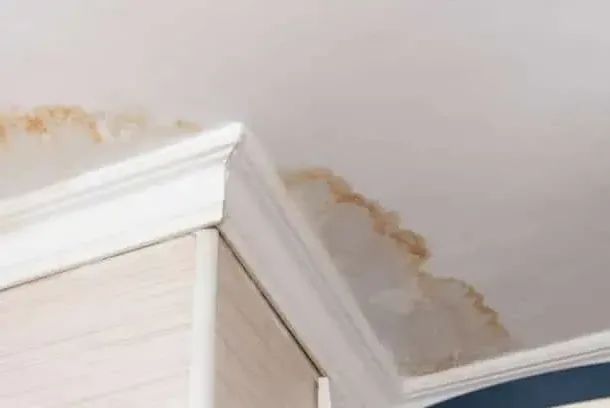
Much of the township's housing went up between the late 1960s and 1990, so many roofs are on a second or third set of shingles. Wind-driven rain from nor'easters and summer thunderstorms gets under lifted shingles and failing flashing around chimneys, vents and skylights, and heavy snow sends meltwater back up under the edges.
From the roof to the ceiling
- Attic insulation soaks up the first water and hides it
- Ceiling drywall stains, then sags when it holds water
- Water follows rafters and top plates into the walls below
- Light fixtures and ceiling fans in the wet area get checked before power goes back on
How a roof leak gets dried
The drying team pulls the wet insulation, opens or removes ceiling drywall that sagged or stays wet on the meter, and dries the attic framing and the room below with air movers and LGR dehumidifiers. Wet roof sheathing gets noted for the roofer and the adjuster.
Roofers, storms and the claim
Storm damage to a roof is often covered, while wear and age usually are not. A roofer repairs the roof; the interior water damage gets documented and dried separately. Ready.gov severe weather advice covers storm prep, and the National Weather Service regional office posts wind and storm warnings.
For a leak that starts inside the house, see ceiling leak water damage.