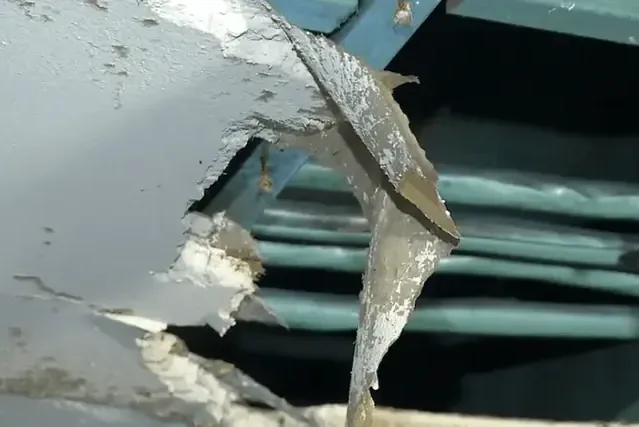
January in the township averages close to freezing, and a run of nights in the teens is enough to freeze water in pipes that run through unheated garages, crawl spaces, attics and outside walls. Ice expands, the pipe splits, and nothing leaks until the thaw. Then water runs at full pressure, often while the house is empty.
Where pipes freeze in local homes
- Supply pipe to an outside hose bib and the wall cavity behind it
- Kitchen and bath pipes on outside walls, behind closed cabinets
- Pipes through an unheated garage to a laundry room or bonus room
- Supply runs in crawl spaces and over unheated porches
Drying after a thaw flood
A pipe on an outside wall soaks the insulation in that wall, which then holds water against the sheathing. The drying team opens the wall where readings say it is wet, pulls the soaked insulation and dries the cavity with air movers and LGR dehumidifiers. Ceilings under a frozen attic or bonus-room pipe usually need opening too.
Long cold spells make it worse: the January 22 to 24, 2016 storm dropped 12 to 16.4 inches of snow across Burlington County, the kind of stretch that keeps garages and crawl spaces below freezing for days.
Protecting pipes before the next cold snap
The Ready.gov winter weather checklist covers pipe protection, and the National Weather Service office for the region posts hard-freeze warnings. For a quick score of your own pipes, run the frozen pipe risk check.