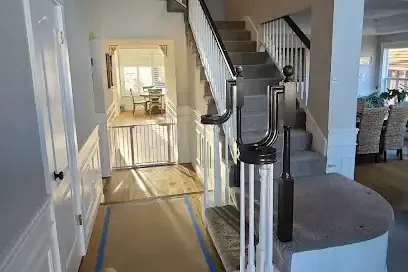
Townhome and condo communities make up a large share of the township's housing, much of it built during the 1970s and 1980s growth years. Shared walls, stacked bathrooms and common supply pipes mean water rarely stays in one unit, and the first question is not how to dry it but where it started.
Tracing a leak between units
The tech who does the walkthrough uses meters and thermal imaging on both sides of the shared wall and the ceiling, and asks for access to the unit above or next door. The source decides whose insurance leads and what category the water is.
Drying a shared wall
- Moisture mapped in every affected unit, with a separate record for each
- Drywall opened only where readings show it is wet
- Cavity drying from one side when the other unit cannot be opened
- LGR dehumidifiers in each unit, sized to that unit's rooms
Associations, owners and claims
An association's master policy often covers common elements and the building structure, while each owner's policy covers the unit interior and belongings; the split depends on the master deed and the policies. The New Jersey Department of Banking and Insurance explains how homeowners and condo coverage work, and EPA WaterSense covers finding slow leaks.
For leaks that start at a washer or dishwasher, see appliance leak water damage.