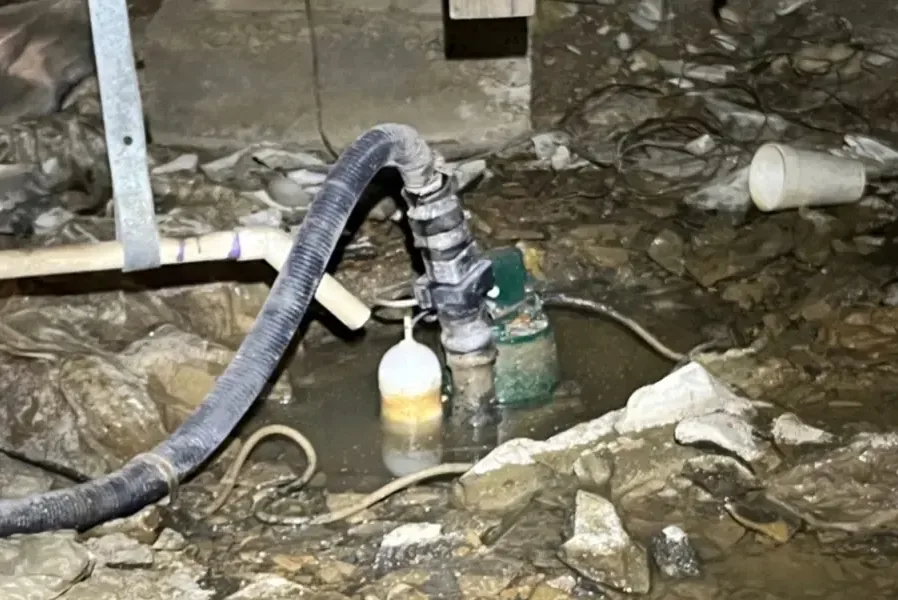
A sump pump only gets noticed on the day it fails, and that is often a day of heavy rain. When a pit overflows, water spreads under carpet and into the base of walls before anyone looks downstairs. The restoration team treats it as a flood from below, with extraction first, soaked finishes second and a measured dry-down last.
Paperwork that follows a pump
The borough Sewer Department issues Certificates of Compliance for the proper connection of sump pumps, roof drains and similar drains, filed before a property transfers. After a failure, ask whether the discharge connection is in order, since a restored floor will not matter if the pit overflows again.
What the cleanup includes
- Overflow extracted from the floor, then the slab dried around the pit
- Carpet and pad lifted, with the lowest drywall opened if it wicked water upward
- Hard surfaces cleaned with antimicrobial when the water turned gray
- Air movers and dehumidifiers placed from readings, not guesses
Cause and rebuild questions
Sump water often starts as clean groundwater, then turns gray as it sits and crosses soiled floors. The longer it stands, the more material has to be discarded, so a temporary pump and dehumidifiers can start while the permanent pump is repaired. Wet framing is covered under structural drying.
Keep the failed pump and float switch if the plumber replaces them, and photograph the pit with the water mark visible. An adjuster may ask exactly what stopped working.