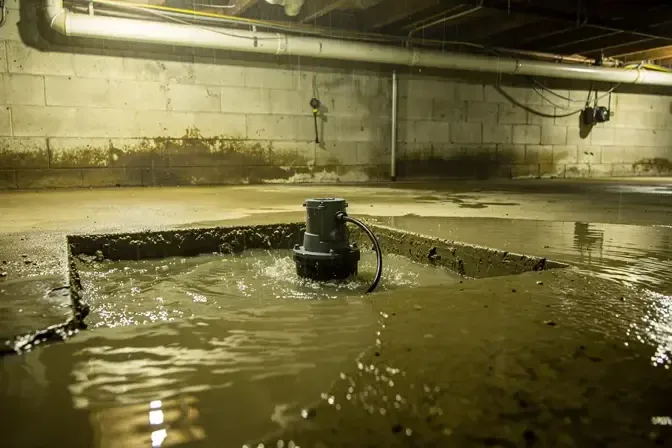
Lower level water cleanup

Basement Flooding Cleanup in Palmyra, NJ

When rain, a rising water table or a failed pump puts water in a lower level, the first job is a controlled pump-out. Soaked finishes come out next, and the slab and wall bases dry afterward.

(888) 471-9821Dry out a flooded lower level
Controlled pump-out Flood cuts on drywall Slab and wall drying
Air movers and a dehumidifier drying a stripped lower room
This loss at a glance
SequencePump-out, strip-out, dry-down
TargetsSlab, studs and wall bases
RemovedSoaked carpet, pad and lower drywall
RecordsDaily meter readings
First moves

Basement Flooding Cleanup: what to do before the crew arrives

  1. 1
    Stay off the stairs

    Deep water hides steps and hazards, and flood water can carry sewage. Wait for the crew and protective gear.

  2. 2
    Leave the panel alone

    If water reached outlets or the floor is wet, let an electrician check before anyone goes down.

  3. 3
    Photograph the stain

    Take pictures of the waterline on the walls, the source and stored items before cleanup starts.

  4. 4
    Skip the fast drain

    Pumping everything out at once can stress walls and slab. The crew lowers the level in stages.

Order of the work

How basement flooding cleanup is handled in Palmyra, NJ

Measure, extract, dry, verify: skipping a step is how hidden moisture ends up sealed inside a wall.

  1. 1

    Stage the pump-out

    Water is lowered in steps so walls and slab are not stressed, and hazards are marked first.

  2. 2

    Strip what soaked

    Carpet, pad and lower drywall that wicked water come out, and the remaining surfaces are cleaned.

  3. 3

    Dry the structure

    Desiccant units and air movers run on the slab and wall bases while readings steer each adjustment.

  4. 4

    Sign off with numbers

    Final readings are compared with the dry reference and filed for the owner and adjuster.

Typical cost ranges

What does basement flooding cleanup cost in Palmyra, NJ?

Lower-level cleanup commonly lands between $2,500 and $20,000 or more. The range depends on finish level, how long the water stood and whether it came from groundwater or sewage.

Bare slab, clean water

$2,500 to $5,000
  • Staged pump-out first
  • Wall base drying
  • Readings logged daily

Finished room soaked

$5,000 to $12,000
  • Carpet and pad out
  • Lower drywall cut out
  • Desiccant drying

Groundwater or sewage

$12,000 to $20,000+
  • Containment barriers set
  • Porous finishes removed
  • Antimicrobial pass

Ranges move with the water category, the square footage, the material class and how fast drying started. For a planning number, run the water damage cost calculator.

A flooded lower level is two problems at once: the water you can see and the moisture moving into concrete, framing and stored belongings. The crew handles both, starting with a staged pump-out so the full weight of the water does not push on the foundation walls all at once.

Why records matter here

The borough keeps a list of properties with FEMA map amendments and shows major flooding areas on detailed maps at its Construction Office. Photos and moisture logs from the cleanup give an owner something concrete to bring to those conversations and to an adjuster.

What comes out and what stays

  • Carpet and pad that sat in the water, removed and bagged
  • Drywall cut back to a clean, dry edge above the waterline
  • Concrete, block and framing kept, cleaned and dried in place
  • Stored boxes and soft furniture sorted, with contaminated items discarded

Drying a slab takes patience

Concrete holds moisture long after the surface looks dry, which is why structural drying readings run for days. Desiccant dehumidifiers and air movers keep running until readings in the slab, sill plates and wall bases fall to the dry reference set on day one. A failed pump is one common cause, covered under sump pump failure cleanup.

In a mapped flood zone, ask the Construction Office about the substantial improvement rule, which counts repairs reaching 50 percent of market value over 10 years, before a large rebuild is priced.

Service area

Basement flooding cleanup across the area and nearby towns

Service area around the town

Lower-level flooding work covers the streets the borough lists in its FEMA map amendment records, including Temple Boulevard, Garfield Avenue, Maryland Avenue and Oregon Avenue, along with the rest of the borough.

The same service nearby: basement flooding cleanup in Mount Laurel, Collingswood, Audubon.

Every water service in this town · every town covered

Questions

Basement Flooding Cleanup questions in Palmyra, NJ

Is every flooded lower level treated as sewage?

No. Clean supply water is the easiest case, but river, storm or groundwater flooding is usually handled as Category 3 until the source is clear and the surfaces are tested.

Should the water be pumped out all at once?

Usually not. The soil outside can still be saturated, so the crew lowers the level in stages to protect the walls and slab from pressure.

How long does the dry-down take?

Several days is common for a slab and wall bases, and block walls or finished rooms take longer. Daily readings decide when equipment leaves, not the calendar.

Does a failed sump pump change the work?

It changes the cause more than the cleanup. A pump that quit during rain usually means groundwater, and the dry-down follows the same steps with extra attention to the pit.

Do repairs trigger the borough flood rule?

Only in a mapped flood zone. Repairs that reach 50 percent of market value within 10 years count as substantial improvement, so keep estimates and drying records together.

What should be thrown out first?

Porous items that sat in flood water, such as carpet pad, insulation, cardboard and upholstered furniture, are discarded. Hard items are cleaned and checked before they stay.

Water in the house right now

Get the lower level back to dry

The team brings pumps, desiccant dehumidifiers and meters, then records readings until slab and walls reach the dry target.

(888) 471-9821Request the dry-down plan
(888) 471-9821 flood & leak help