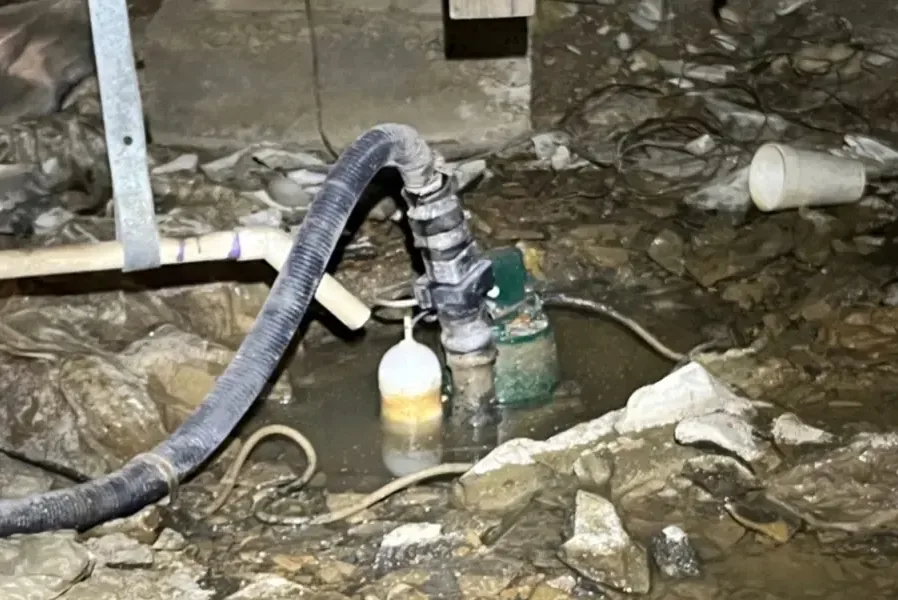
A sump pump is the last barrier between groundwater and the floor, and when it fails the water arrives all at once. The pit overflows, the slab floods, and carpet, boxes and the bottom of finished walls start drawing moisture upward. The pump may have lost power, jammed, or simply been overwhelmed by the rain.
Why discharge matters
Borough code Chapter 247 says no person shall connect a sump pump to a sewer, and it makes the record title owner responsible. A replacement pump and its discharge route should be planned with that rule in mind, while the cleanup crew handles the water already inside.
What the crew handles
- Extraction of the pit overflow and the standing water on the slab
- Removal of carpet, padding and drywall that wicked water upward
- Disinfection of hard surfaces when the water was contaminated
- Dehumidification of the slab, walls and framing until readings level out
Rain, power and the next storm
Pumps are asked to work hardest when the rain is heaviest, which is also when power can fail. A battery backup, a working check valve and a clear discharge hose all lower the chance of a repeat, and a plumber can advise on which fits the pit.
Standing water from a failed pump often overlaps with basement flooding cleanup, and long exposure is dried under structural drying. FloodSmart.gov explains how flood coverage differs from standard policies, and OSHA covers electrical hazards around wet equipment.