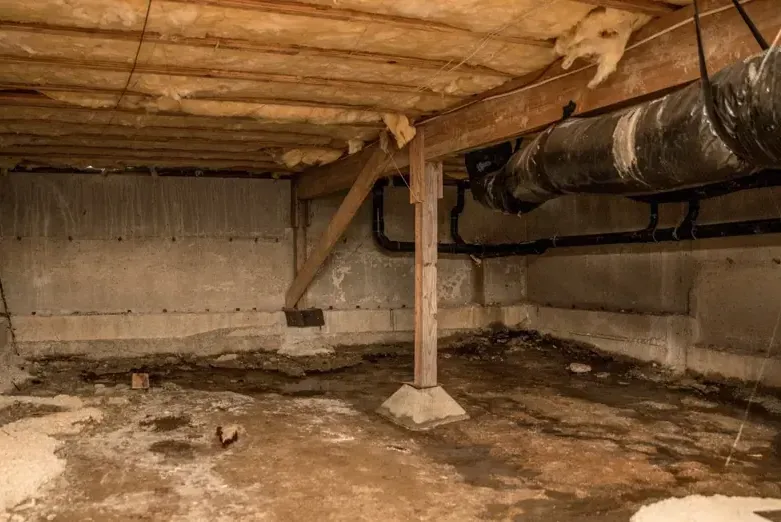
Where a house has a crawl space, water can sit there for weeks before the floor above feels soft. Pipe leaks, drain trouble, pump failure and groundwater all end up in the same dark space, and the restoration team starts by finding which one it is.
What water does under a floor
Wet insulation holds water against the joists, a torn vapor barrier traps humidity, and the subfloor above slowly absorbs it. By the time a spongy spot shows up inside, the damage underneath is often wide.
How the crew works down there
- Pumps standing water through low-clearance hoses
- Pulls soaked insulation and a ruined barrier out in sealed bags
- Reads joist, sill and subfloor moisture before and after
- Sets a dehumidifier and air movers sized to the space
Drainage questions to settle
A crawl space that floods again after drying is a drainage problem, not a cleanup problem. The borough Sewer Department issues Certificates of Compliance for sump pump and roof drain connections, so those connections are worth checking before a repair is closed up. A pump that quit is covered under sump pump failure cleanup.
Roof water that lands beside the house can end up under it, so downspouts and grading belong on the checklist. Final structural drying readings show when the framing is ready to close.