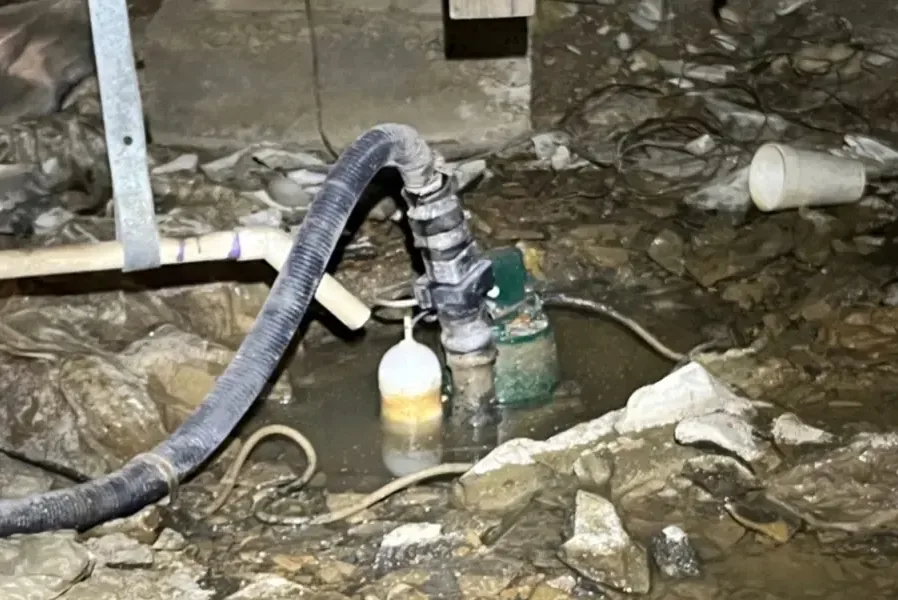
A sump pump only helps while it runs. When power drops, a float sticks or the pit is simply too small for a downpour, the water spills across the floor and soaks everything it touches. The crew treats the overflow as a storm-water loss until the source is known.
Heavy rain is the test
On July 6, 2026 a thunderstorm dropped nearly 3 inches of rain across Camden County, with road closures and more than 40 water rescues. County officials tied that flooding to saturated ground and a high water table, and a rain burst like that is exactly what overworks a sump pit.
What the cleanup removes
- Standing water around the pit and across the floor
- Carpet and pad that soaked through
- Lower drywall cut out above the wet mark
- Stored items that touched the water, sorted for salvage
Getting dry and staying dry
Extended drying with dehumidifiers and air movers follows, with readings logged until the floor and walls match a dry reference. A wider basement flooding cleanup covers the rest of the space when water spread far from the pit.
Before the next storm, the pump, float switch and discharge hose should be tested, and a battery backup is worth asking an installer about. The crew handles water extraction and drying, while a plumber handles the pump itself.