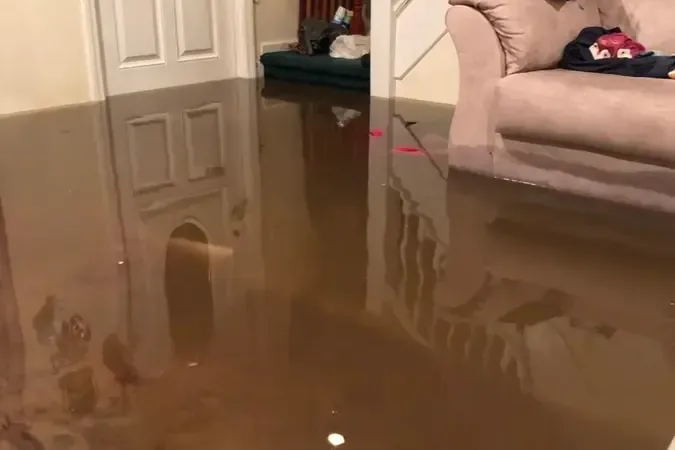
The borough sits on the Delaware River with Pennsauken Creek at its edge, and a FEMA flood study names the river as a flooding source here. Borough emergency management lists four flood-prone intersections, Temple Boulevard at Garfield Avenue, Fifth Street at Route 73, Leconey Circle at Firth Lane and Spring Garden Street at Route 73, and points to an aging storm drain system and high tides.
When the street floods
On July 12, 2021, the borough fire department reported most roads flooded for a few hours in the evening, while flash flooding drove 12 water rescues across Burlington County. Water that rises that fast reaches garages, entry doors and the lowest rooms before anyone can move belongings.
How flood water is cleaned up
- Extraction of standing water, then removal of the carpet, pad, insulation and drywall it soaked
- Flood cuts above the wet line, set by meter readings
- Hard surfaces scrubbed, then disinfected with an EPA-registered antimicrobial
- LGR and desiccant drying until the framing reads dry
Permits and the 50 percent rule
In a FEMA special flood hazard area, the borough requires a floodplain development permit even for in-kind replacement of windows, doors, cabinets and roofing, and its Flood Damage Prevention Ordinance treats repairs reaching 50 percent of market value within 10 years as substantial improvement. Keep the drying file with the repair estimates.
FloodSmart.gov covers flood insurance basics, and OSHA publishes flood cleanup safety guidance. For a drain that backs up instead, see sewage backup cleanup, and for every other water problem, water damage restoration across the borough.