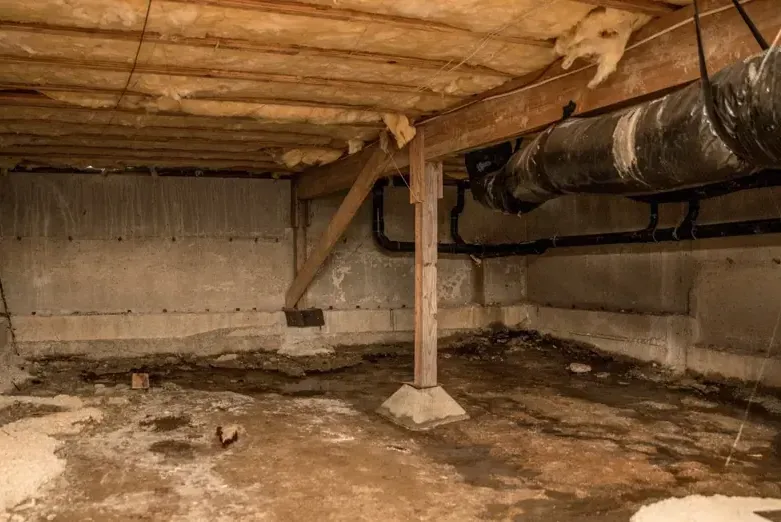
Water in a crawl space is easy to miss. It collects under the floor, soaks the insulation, and rises as humidity into the framing above, so floors can feel cool, spongy or musty before anyone sees a puddle. Locating where it came from is the first job.
Finding the source
A leaking supply pipe, a drain, groundwater seeping in after heavy rain or a failed appliance above can all feed the same space. Moisture meters and a thermal camera show how far the water has spread through the joists and the subfloor.
What gets removed
- Standing water, pumped out or drawn up with wet vacuums
- Insulation that has soaked and sagged
- Vapor barrier that is torn or holding water
- Debris and wet material that cannot be dried
Drying a tight space
Dehumidifiers and air movers are set up so air actually circulates around the joists, with hoses run through the access opening. Readings are taken at the wood and subfloor until they approach normal, and contaminated water changes the plan.
When the source was a failed pipe, see burst pipe water damage. Sewage in a crawl space follows the sewage backup cleanup approach.