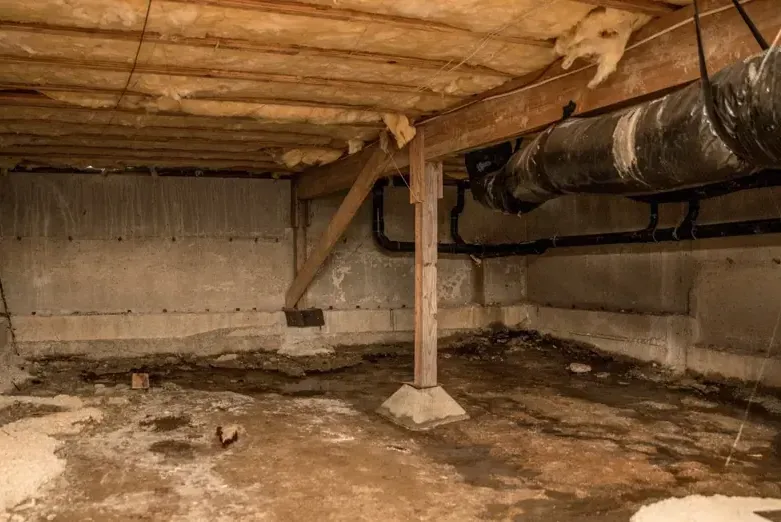
A crawl space hides its problems. Water from a leaking pipe or a heavy storm can sit on the barrier for days while insulation sags and floor joists soak it up, so the crew goes in with pumps, lights and moisture meters to find out how far it reached.
Why it matters
The median home in the borough was built in 1938, so many houses are old enough that the space under the floor has seen decades of moisture. Wet joists and subfloor also hold water long after the surface looks fine.
What the crew does
- Pumps water off the vapor barrier and out of low spots
- Pulls insulation that has sagged or soaked
- Removes torn or contaminated barrier sections
- Reads joists and subfloor for hidden moisture
Drying from below
Dehumidifiers and air movers are placed so dry air crosses the framing, and readings repeat until the wood returns to normal. When the water entered from a pipe above, burst pipe water damage covers the cleanup in the rooms.
If sewage or storm runoff is involved, the work follows sewage backup cleanup steps, with containment and antimicrobial treatment before any drying begins.