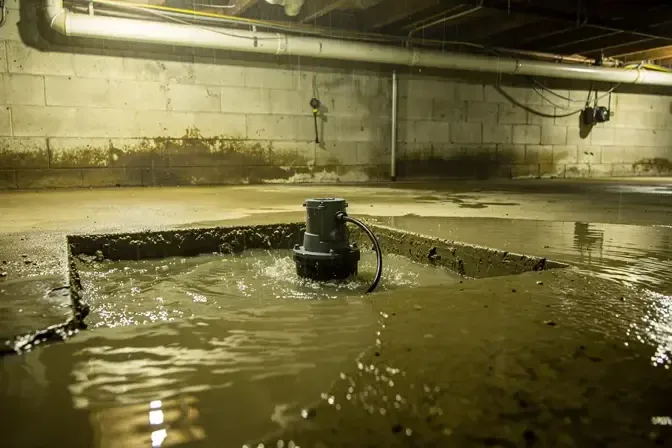
A flooded lower level presents the same problem on every job: water, soaked finishes and air that cannot dry them. The crew starts by removing the water, then works upward through carpet, pad, baseboards and drywall to find where the wetness stops.
Where the water came from
Heavy rain can overload a yard or an old drain, a sump pit can overflow and a supply pipe can split, and each source changes the plan. Clean water allows more drying in place, while storm or sewage water means finishes come out. Where a pump failed, sump pump failure cleanup covers that cause.
What gets removed
- Carpet and pad that sat in water for any length of time
- Drywall cut above the wet mark so the cavity can breathe
- Insulation that wicked water up the wall
- Stored boxes and soft furnishings touched by contaminated water
Drying a lower level in summer
Humid summers mean outdoor air does not help drying, so dehumidifiers and desiccant units do the work while meters track each material. The structural drying plan lists every reading so progress is clear.
Finished spaces get flood cuts and new baseboards later, while unfinished spaces often need only extraction and drying. The scope depends on what the water touched, not on a standard package.