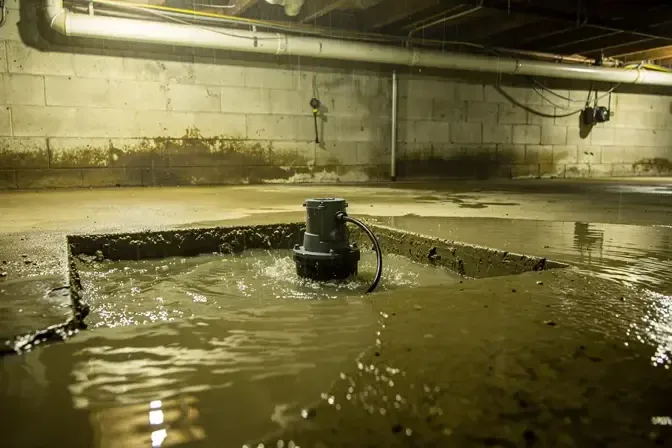
A lower level that takes on water is a different problem from a wet room upstairs. The walls, slab and framing sit in contact with moisture, and finished space adds carpet, padding and drywall that wick it upward. Storm water from the Cooper River, Newton Creek or Newton Lake corridors can be the cause, but a failed pipe or a drain backup leaves the same mess.
Pumping out the right way
Water is pumped down in stages rather than all at once, because the soil outside can still be saturated and a sudden drop in the level can stress the walls. Extractors then clear what the pumps leave behind.
What comes out and what stays
- Carpet and padding that sat in water
- Drywall that wicked moisture above the waterline
- Insulation and baseboards that stay wet
- Hard surfaces and framing, which are dried and cleaned
After the water is gone
Dehumidifiers and air movers take over, and readings are logged until slab, studs and drywall all reach normal levels. Storm or creek water brings extra steps, covered under storm and creek flood cleanup, while a failed pump is covered under sump pump failure cleanup.
Photos of the waterline and notes on what was removed should be kept for the insurer. FloodSmart.gov explains how flood coverage differs from a standard policy.