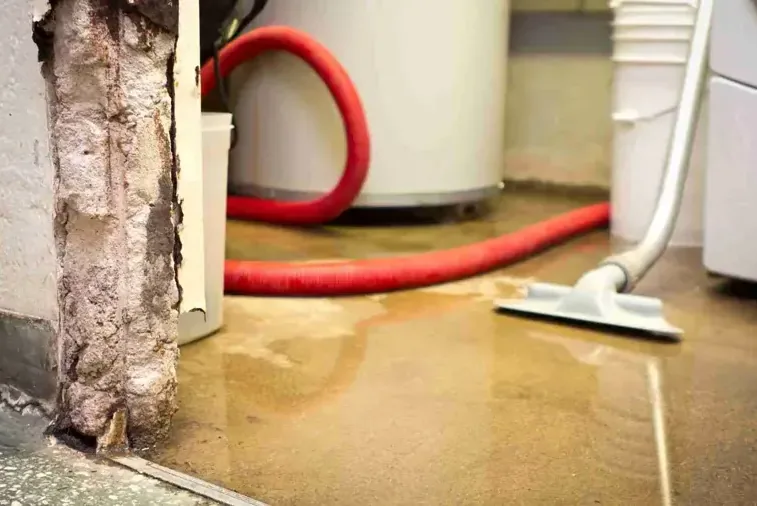
A leaking water heater can release a lot of water quickly, so shutting off the water supply to the unit and the power or gas feeding it limits the damage before cleanup starts. Fresh tank water is clean, but that changes if it sits for days on dirty floors.
Why a slow leak is worse
A weeping fitting or a corroded tank bottom can drip for weeks behind a closet door. The wet floor, baseboard and lower wall stay hidden, and by the time a musty smell appears the subfloor has often soaked through.
What the cleanup includes
- Extraction with a wand and, for deep water, a small pump.
- Removal of wet carpet pad, flooring and lower drywall near the tank.
- LGR dehumidifiers and air movers aimed at the closet and the floor.
- Antimicrobial where the water stood or a leak ran for a long time.
Coordinating the repairs
A plumber replaces the tank or fitting, and the restoration crew handles the drying around it. Drying first, then replacing the unit, avoids setting a new heater on a wet floor, and a drain pan under the new tank catches the next drip early.
For leaks that reached a finished space below, see basement flooding cleanup, and the drying time estimator shows what the equipment run may involve.