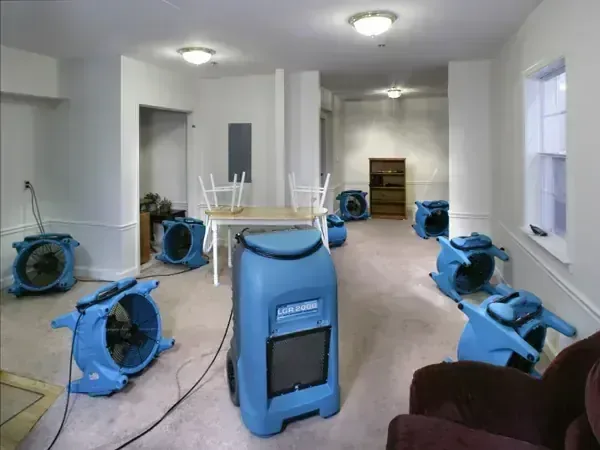
After the standing water is gone, the structure still holds moisture in wood, plaster, subfloor and wall cavities. Structural drying pulls that moisture out with controlled air, heat and dehumidification, and it keeps going until measured values reach the dry reference points.
Why drying records matter here
The borough's Flood Damage Prevention Ordinance defines substantial damage as repair cost above 50 percent of a structure's market value. For a property in a mapped flood area, organized drying logs and itemized estimates make that comparison easier for the owner.
Equipment and monitoring
- LGR dehumidifiers keep working even when the room air is already damp.
- Desiccant units handle dense materials and cooler spaces.
- Floor mat systems pull water out of hardwood without removing it.
- Psychrometric logs track temperature and humidity at every visit.
Placement follows the moisture map rather than a fixed pattern, so a wet closet corner gets as much attention as the middle of the room. Technicians adjust the equipment at each visit as materials dry.
When drying is finished
Equipment comes out only when readings in the wettest materials match dry reference points, not when the surface feels dry. The final log is saved for the claim and for any contractor repairing the space.
Drying follows water extraction in most losses, and the drying time estimator gives a first idea of how long the equipment may need to run.