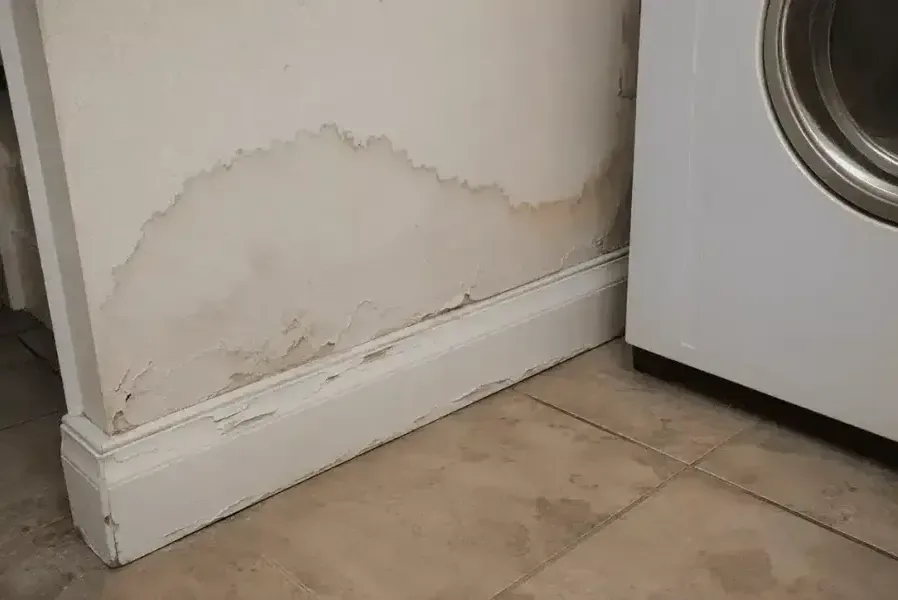
A failed appliance hose or tube can release water quickly, and slow leaks behind a dishwasher or under a refrigerator can run for weeks before a swollen floor gives them away.
Where the water hides
Water runs under cabinets, behind toe kicks and into the subfloor, where a surface check shows nothing. Moisture meters and a thermal camera follow it, because wet cabinet bases and plywood stay damp for a long time.
What the crew does
- Extraction of standing water and lifting of soaked flooring.
- Toe kicks are removed so air and drying tools can reach under the cabinets.
- Injection drying pushes warm air into closed cavities without tearing out cabinets.
- Upstairs laundry leaks get a ceiling check in the room below.
A swollen cabinet base or a cupped floor along the wall usually means the leak ran for some time, which widens the area that needs drying.
Preventing the next one
Replacing old rubber hoses with braided ones and checking connections now and then lowers the odds. A plumber can fix the supply, and the restoration crew dries what the leak soaked.
For leaks that crossed a ceiling, see ceiling leak water damage, and water heater leak cleanup covers the tank side.