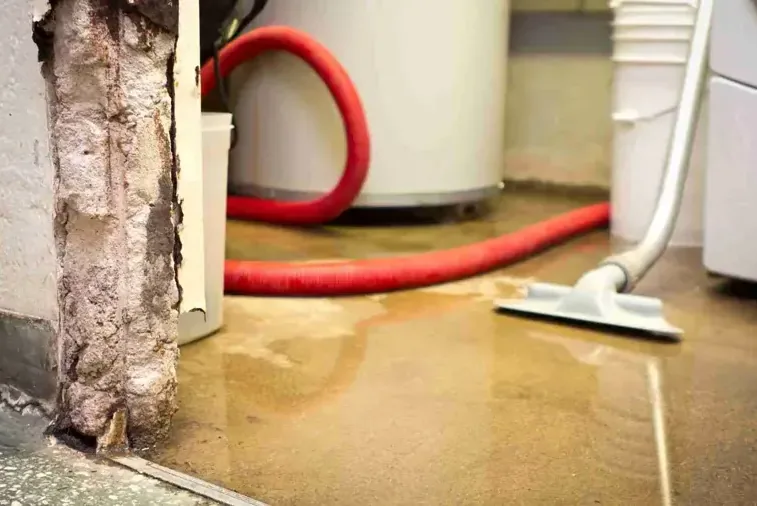
A water heater leak is often a slow one, a rusting tank or a weeping fitting that wets the floor for weeks before anyone notices. A sudden failure is the opposite, with a whole tank of water spreading across the room fast.
First moves at the tank
Shut off the cold water supply to the tank, then turn off the electric power or the gas valve before going near the water. Leave relighting or replacing the heater to a plumber, and keep the old tank if the insurer asks to see it.
What gets dried and removed
- Standing water on garage or utility room floors is extracted
- Wet flooring, pad and baseboards in a closet or finished space come out
- Lower drywall is flood cut above the wet line
- Subfloor and wall bases are dried with LGR units and air movers
Slow leaks and hidden damage
A slow leak can soften subfloor and swell cabinets or trim long before a puddle appears, so meters check beyond the visible spot. Moisture readings from each visit show whether two floors are involved when the heater sits above or beside finished space.
For the pump-out stage see water extraction, and for the dry-out itself see structural drying. Photos of the tank and the damage support the insurance claim.