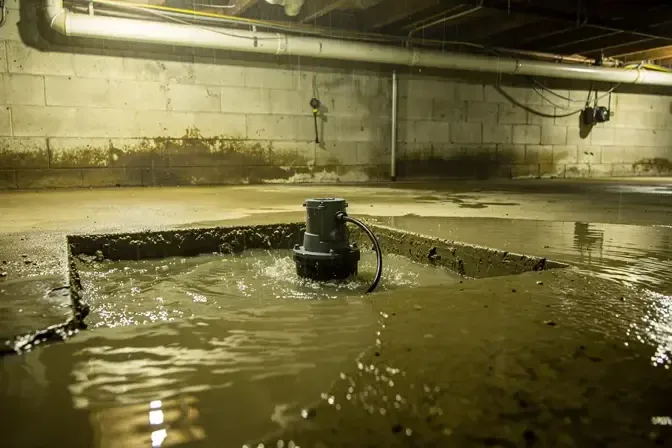
A lower-level flood changes quickly because the slab and walls hold water long after the surface looks dry. For homes that have a basement here, the drainage backdrop is older sewer mains, owner-owned laterals and rain that works its way into sewer pipes during heavy storms.
Why speed matters
Water pushes into drywall, wicks up wood framing and soaks carpet pad within the first day. Pumping down in stages avoids stressing wet walls, and the extraction crew then reads moisture in every wall bay.
Clean water or something worse?
- Clean supply or sump overflow water lets more materials be saved.
- Groundwater that came in from outside is gray or worse, so carpet, pad and lower drywall are cut out.
- Sewage is Category 3 and gets containment, HEPA air scrubbing and disinfecting.
- Tank or appliance water counts as clean while it is fresh, then gets reassessed as it ages.
What the drying involves
Flood cuts go above the waterline mark so wet insulation can be removed and the cavity can dry. Desiccant and LGR dehumidifiers run beside air movers, with readings taken daily at the same spots.
Owners worried about repeat flooding can read about sump pump failure cleanup or the sewage backup service.