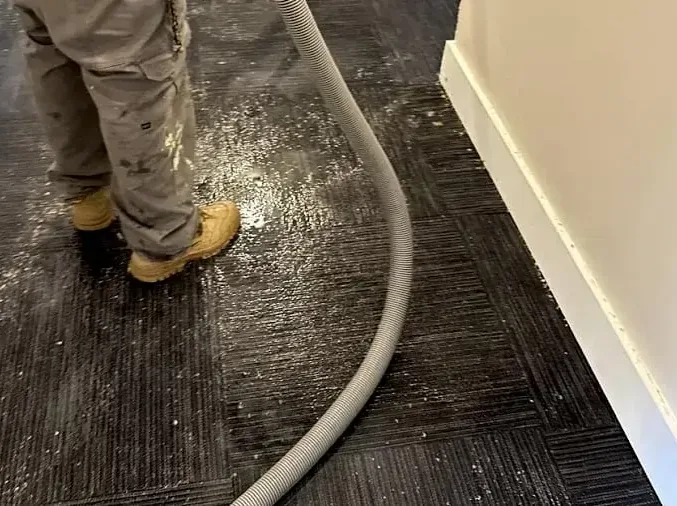
Standing water keeps spreading while it sits: it soaks pad, swells baseboards and wicks up drywall. In Haddon Heights, where the median home dates to around 1947, aged wood and plaster hold that moisture stubbornly, so pulling out the bulk of it early shortens everything that follows.
How the pump-out works
Submersible pumps handle deep water, then truck-mounted extraction pulls the rest from carpet, pad and hard floors. A moisture meter and thermal camera follow, showing which rooms still hold water in the subfloor or the walls.
What comes out and what stays
- Soaked pad is usually discarded, while the carpet above it can often be lifted, extracted and dried.
- Hardwood gets a floor mat system when boards have not yet cupped.
- Wet baseboards are removed so air can reach the base of the wall.
- Water that came from a drain or over the ground is treated as contaminated and contained.
On a clean-water loss the carpet often comes back, but speed matters: the longer pad stays saturated, the more likely the whole room needs to be opened up for drying.
Keeping the claim organized
Each visit adds readings to the drying log, and photos record the starting condition. Adjusters usually ask for that file, so it is built from the first pump-out onward. A thermal camera image of the starting condition goes into the file too.
Once the bulk of the water is gone, structural drying takes over, and a contaminated source moves the job into sewage backup cleanup instead.