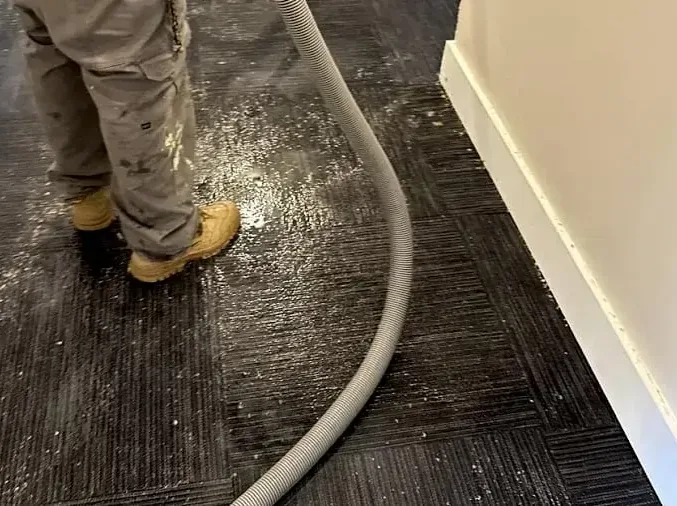
Standing water does its worst damage in the first stretch after it arrives, soaking into pad, baseboards and subfloor while the surface looks nearly dry. In Barrington, the 2022 stormwater study lists recurring flood areas such as Third Avenue, Erie Avenue and East Williams Avenue at Clements Bridge Road, and the June 19 and 20, 2019 flash flood inundated several homes and businesses in the Barrington area.
How extraction works
The crew starts with moisture meters to find where water traveled, then pulls the standing water with truck-mounted units or portable pumps. Wet carpet pad is usually removed because it holds water long after the carpet feels dry. Hard floors get wands that lift water from seams and thresholds.
What gets pulled out first
- Standing water on any floor, from a few inches in a garage to a flooded living room
- Soaked carpet pad and loose trim that would keep the room wet
- Water trapped under area rugs, mats and stored boxes
- Water pooled in low corners, closets and doorways
Why speed matters after a storm
Storm water from the street can carry dirt and sewage, which changes the job from clean up to Category 3 protocol with containment and disinfection. The drying team checks the water source before work starts, says plainly when a room needs more than extraction and shares the readings afterward.
Extraction is usually the first stage of a longer dry-out. Once the standing water is gone, structural drying brings walls, floors and framing down to dry readings. A log of each reading goes to the property owner and the insurer.