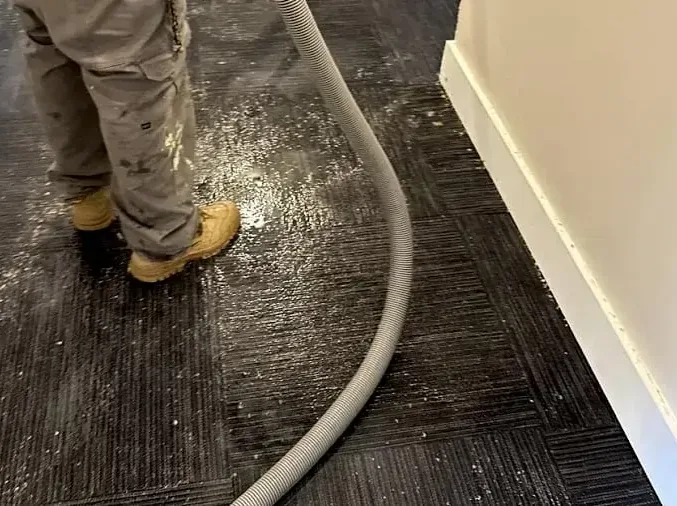
Extraction is the step that decides how big a water loss gets. Water that sits keeps spreading into pad, baseboards and the bottom of the drywall, so the crew removes the bulk of it before measuring or drying anything else. On a typical job that means a truck-mounted unit at the door and hand wands for the corners, and the first readings come as soon as the surface water is gone.
Why speed matters
Flash flooding reached a residential street here on May 16, 2025, a reminder that fast water can arrive with a severe storm. Extraction starts before water settles into pad, drywall and subfloor. Carpet over pad acts like a sponge, and hardwood cups as the boards drink, so the sooner the surface is clear the more flooring stays in place.
What the crew uses
- Truck-mounted units for deep water across large floors
- Portable pumps and hand wands for stairs, closets and tight corners
- Pad and carpet lifted when water has soaked through
- Moisture meters to find water that stayed behind
After the water is out
Pumping alone never leaves a room dry. The crew takes readings in drywall, framing and flooring, then sets air movers and dehumidifiers through structural drying so the leftover moisture comes out.
When the water rose from a lower level, the work continues under basement flooding cleanup, where walls and floors get their own drying plan.
Contaminated water changes the job. Storm runoff and drain backups are treated as Category 3, with protective gear, removal of porous materials and antimicrobial treatment.