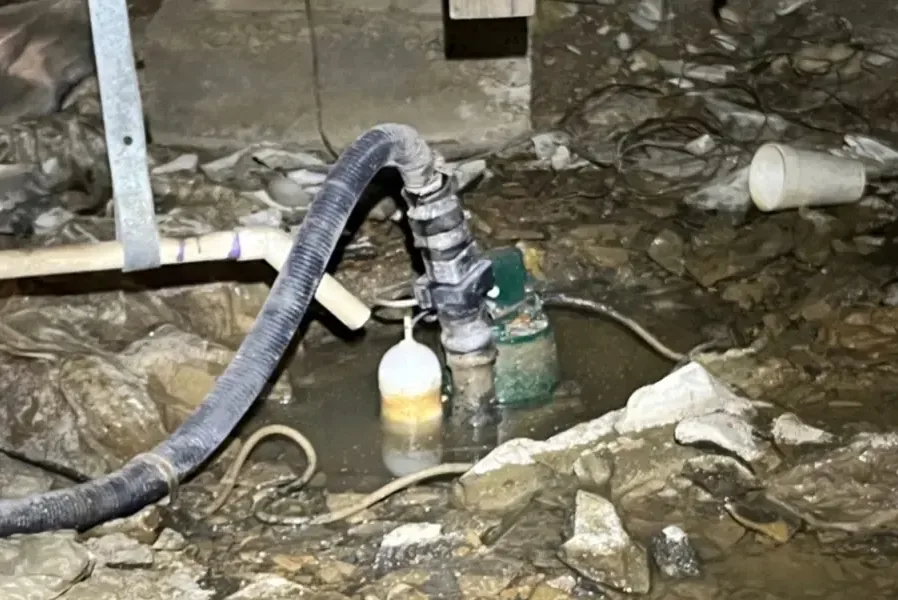
When the pump stops, rain and groundwater rise in the pit and spill across the floor, and the failure often arrives during the same storm that brings the most water. What starts as clean overflow turns gray if it stands, so the first hours of response decide how much can be saved.
Why pumps fail at the worst time
Pumps burn out, floats stick, discharge hoses clog or freeze, and a power outage during a storm silences a plain electric unit. Whatever the cause, the pit overflows into the room, and a unit with no battery backup has nothing to fall back on. Testing the pump before storm season, by pouring water into the pit and watching the float lift, lowers the odds.
What the cleanup includes
- Extraction around the pit and across the slab.
- Carpet and pad removal when they have soaked through.
- Lower drywall cut out above the wet mark so the cavity can dry.
- Antimicrobial on hard surfaces, and Category 3 protocol if the water stood for days.
After the pump is working again
Drying continues for several days with readings at each visit. A new or repaired pump matters, but it does not dry a wet slab, which is why the basement flooding cleanup plan and the drying time estimator both start from the moisture readings.