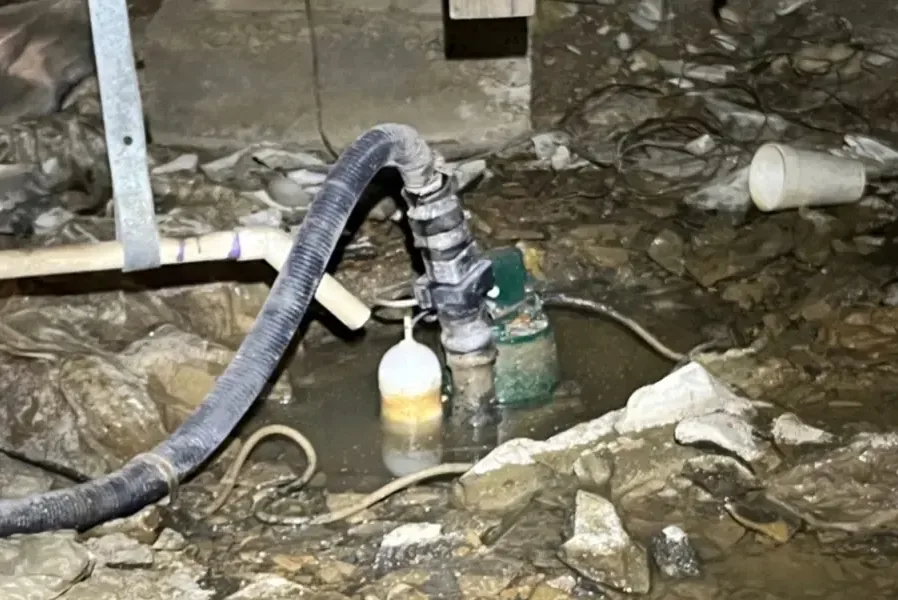
A sump pump only matters on the day it fails, and that is usually the day the ground is already saturated and the pit fills fastest. Heavy storms are exactly when a pump works hardest. By the time the overflow is noticed, water has often crossed the slab and reached walls, stored boxes and furniture.
What the borough checks at resale
The borough's resale Certificate of Inspection includes a sump pump inspection by the Superintendent of Public Works, along with gutters, downspouts, windows, porches, railings, steps and exterior paint. A pump that passed an inspection can still fail later, because power cuts and clogged floats happen without warning.
After the pump fails
- Water around the pit is extracted from the slab, carpet and stored items
- Soaked padding and the lower drywall are removed along a clean cut line
- Hard surfaces get antimicrobial treatment when the water was not clean
- Dehumidifiers and air movers run with daily readings until the slab is dry
Why the cause matters
Sump overflow water is usually treated as gray or contaminated, so porous materials such as carpet and pad usually come out rather than dry in place. Note whether a power cut, a stuck float or a clog caused the failure, since the insurer will ask, and keep the pump for inspection.
Related work includes basement flooding cleanup for deeper water and structural drying for the dry-out itself.