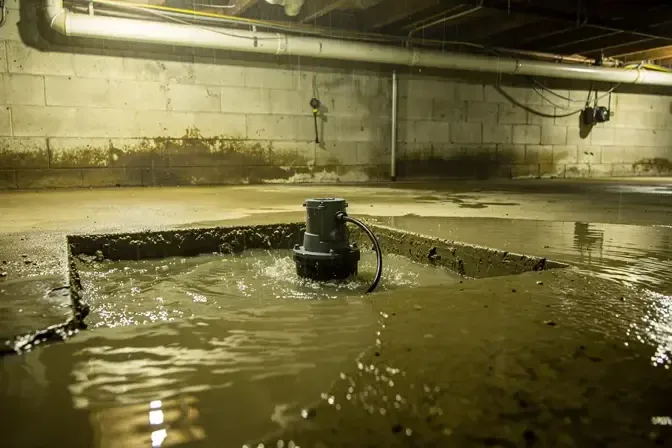
A flooded lower level is as much a drying job as a pumping job, because concrete, block and framing hold water long after the standing depth is gone. The first decision is where the water came from, since groundwater and sewage change the plan.
Where the water comes from
Heavy rain can send street water toward a house, a sump pump can quit during the storm, and a blocked sewer pipe can push wastewater up through floor drains. The 2022 stormwater study lists Third Avenue and Austin Avenue among the borough's recurring flood areas.
What the cleanup includes
- Pump-out of standing water, with extraction wands for the remaining film on the slab
- Carpet, pad and drywall that wicked water removed above the line it reached
- Antimicrobial treatment of hard surfaces when the water was not clean
- LGR or desiccant dehumidifiers running until readings reach the dry goal
Sewer pipe check valves
The borough recommends a check valve on the sewer pipe for properties with below grade fixtures such as washers, toilets and deep sinks, to prevent overflow from blockages. A valve does not stop groundwater or street water, so those losses still need pumping and drying.
A sewage source changes the job to sewage backup cleanup, with containment and removal of porous materials. For help with the water itself, see water extraction.