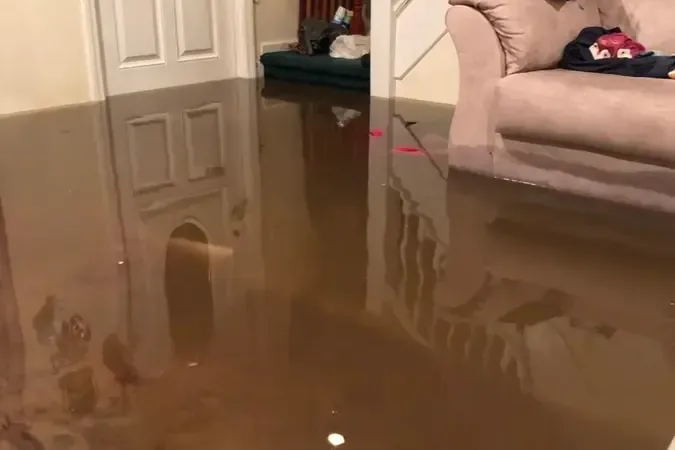
Floodwater is never treated as clean. Storm runoff picks up dirt, chemicals and sewage on its way, so the work starts with containment and protective gear, and anything porous that the water touched is removed. In Barrington, a 2022 stormwater study lists recurring flood areas, and the June 19 and 20, 2019 flash flood closed Interstate 295 for a long stretch.
What the study notes about local flooding
The study notes that water ponds at East Williams Avenue and Clements Bridge Road, and that Erie Avenue floods at a natural low spot where the Atlantic Avenue railroad appears to trap water. Chesterfield Road receives runoff from an apartment complex along Princeton Road.
What gets removed
- Carpet, pad and flooring that sat in floodwater
- Drywall and insulation to a line above the wet level
- Contents that cannot be cleaned, sorted from what can be saved
- Soaked cabinet bases, trim and baseboards
After the water is out
What stays gets scrubbed and sprayed with an EPA registered antimicrobial, then structural drying pulls moisture from framing, slab and subfloor with desiccant and LGR dehumidifiers. Daily readings decide when the equipment leaves and when rebuilding can begin.
After the June 19 and 20 flooding, a borough notice asked residents to report storm damage because FEMA planned to visit Camden County to confirm it. Photos and drying logs help any claim. Related: sewage backup cleanup and water extraction.