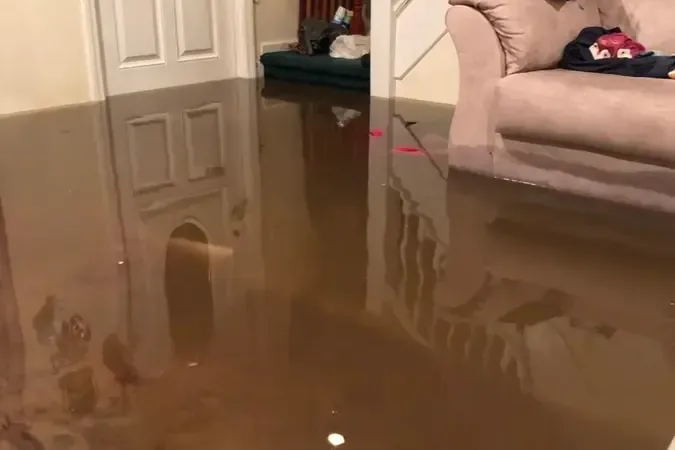
Storm water is different from a plumbing leak. It crosses yards and streets before it reaches a home, picking up dirt, bacteria and sewage along the way, so the crew handles it as Category 3 and removes soaked porous materials before any drying starts. Skipping that order traps contamination in the structure.
Storm days nearby
Severe storms caused flash flooding on a residential street here on May 16, 2025. On July 6, 2026, a thunderstorm dropped nearly 3 inches of rain across Camden County, and a county spokesman cited saturated ground, a high water table and high tide.
What gets removed
- Carpet and pad, which cannot be cleaned after contact with floodwater
- Drywall and insulation cut above the waterline
- Soft furnishings and stored cardboard touched by the water
- Hard surfaces get cleaned and treated rather than discarded
Cleaning, drying and paperwork
After removal, an EPA-registered antimicrobial goes on hard surfaces, and dehumidifiers and air movers dry the structure under structural drying standards. Flood insurance is its own policy, separate from a standard homeowners policy, so the claim path differs from other water losses.
If the water reached a lower level, basement flooding cleanup covers pump-out and cut-back in that space. When a drain backed up as well, sewage backup cleanup applies.