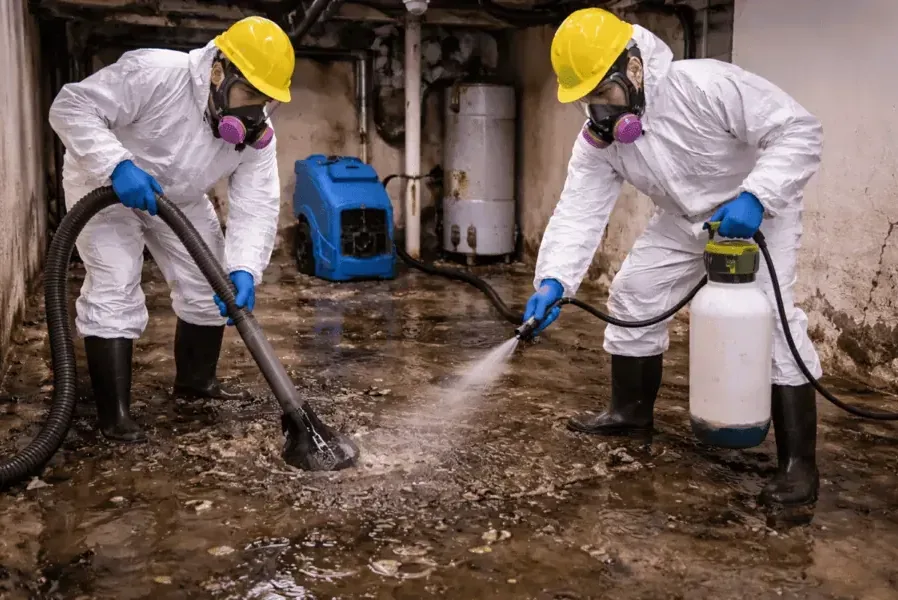
Sewage is the one water loss where nothing is dried until it is cleaned. A backup carries bacteria and viruses, so the crew seals off the area, removes everything porous it touched and disinfects hard surfaces before drying begins. Skipping that order drives contamination deeper into the structure.
Local context
Residents can find a Sewer Emergency page with an after-hours contact on the Public Works website. On July 6, 2026, Camden city officials said heavy rain overwhelmed the city's sewer system, a reminder of how a sudden downpour can stress drains.
What is removed and what is cleaned
- Carpet, pad and rugs that touched the water, which are discarded
- Drywall cut to the wick height and the insulation behind it
- Cabinet kicks and baseboards that soaked
- Hard floors and surfaces, cleaned and treated rather than replaced
Air, health and drying
HEPA air scrubbers filter the air while work is under way, and drying equipment runs only after the contaminated materials are out. OSHA guidance covers protective equipment for this kind of work, and EPA information covers disinfectants.
When storm water caused the backup, storm flood cleanup steps overlap. After removal, structural drying readings confirm the building is dry.