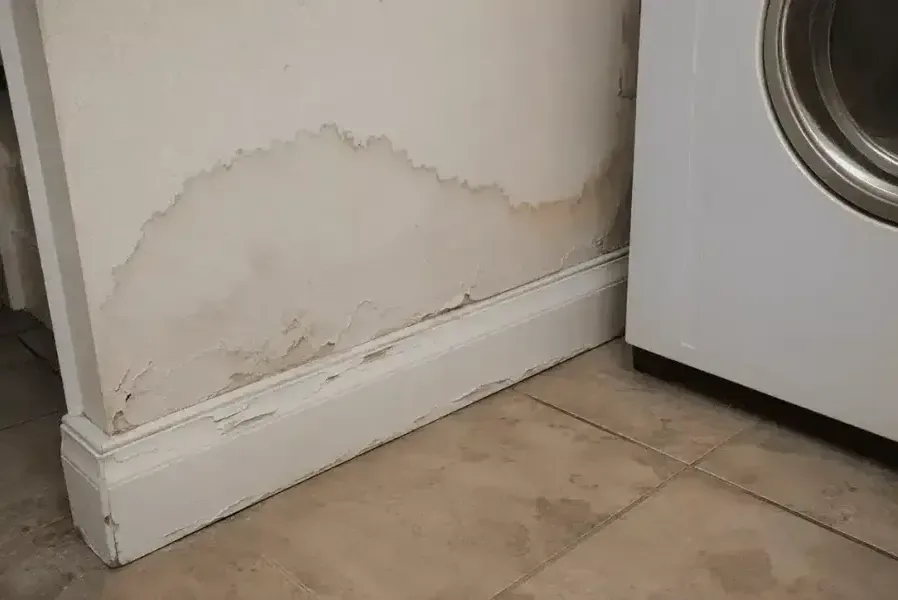
Appliance leaks are quiet. A cracked washer hose or a loose dishwasher fitting can seep for days behind a toe kick or under vinyl, and the first sign is often a soft floor or a musty smell. The crew finds the wet path with meters and thermal imaging.
Owners and renters both see it
The borough had 2,579 owner households and 803 renter households in the 2020 to 2024 survey, and both groups run washers, dishwashers and refrigerators with ice makers. Each of those can leak under floors and cabinets.
What the crew does
- Extracts water from the floor and under cabinets
- Dries toe kicks and cabinet bases with injection drying
- Lifts flooring that has cupped or trapped water
- Reads subfloor and nearby walls for hidden moisture
Upstairs and downstairs
A laundry leak upstairs often comes through the ceiling below, where drywall sags and insulation soaks. The crew follows the water down, as described under ceiling leak water damage, and dries both levels.
After drying, the appliance hose or fitting is replaced by a plumber or appliance technician. Water extraction is the first step on any leak that left standing water.