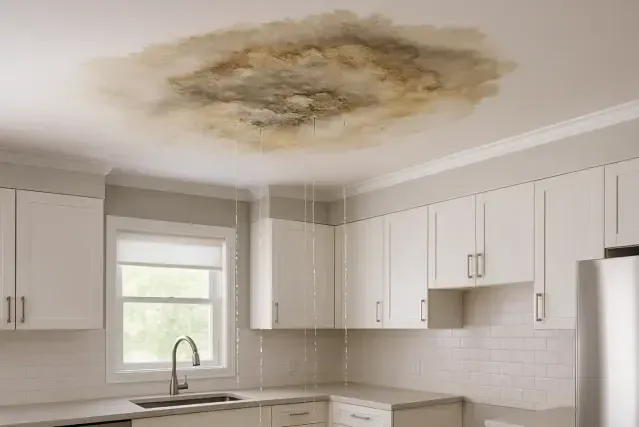
A ceiling stain is rarely directly under the leak. Water slides along joists and pipes before it finds a spot to drip, and in homes where the median build year is around 1947, long runs of framing give it plenty of room to travel.
Finding the real source
The leak may be a roof opening, a supply pipe, a drain, a bathroom above or an appliance upstairs. A moisture meter and thermal camera trace the wet path, because drying without stopping the source only delays the next stain.
What gets opened and dried
- Sagging drywall is cut out so trapped water can drain.
- Insulation in the joist bay is removed when it is soaked.
- Air movers and dehumidifiers dry the framing and the room below.
- Gray water from a drain or toilet adds a Category 2 protocol.
Keeping the damage small
Quick action keeps a stain from becoming a sag, and a sag from becoming a collapse. Ceilings in older houses can let go in large sections once saturated, which is why a controlled opening is safer. Photographs of the ceiling and the date of the first sign help any claim.
If the water came from a pipe, see burst pipe cleanup, and for the roof side read about roof leak water damage.