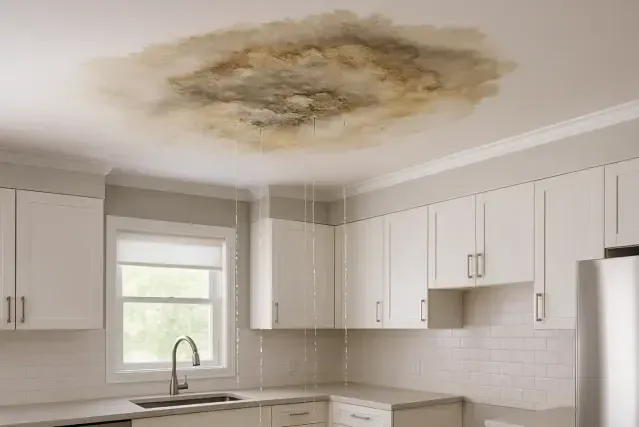
About 22.9 percent of the borough's housing units are in buildings with 20 or more units, including the four Park View towers, so a ceiling leak can begin in a unit upstairs. In houses the cause is more often a roof opening, a bathroom above or a pipe in the joists. Either way, the stain shows where water came out, not where it started.
Tracing the source
The crew checks the room above, the roof and the plumbing that crosses the joist bays, using a moisture meter and a thermal camera to follow the water back. Stopping the source comes before any drying.
Opened ceilings and what comes out
- Drywall that is sagging, bubbling or stained through
- Insulation in the wet joist bays
- Paint and plaster that no longer holds
- Light fixtures and fans, which are checked by an electrician
Drying the bays
Air movers and dehumidifiers dry the exposed joist bays, and the floor of the room above is checked if the leak came from there. In a multi-unit building, the drying plan may involve neighbors, so records are kept for each unit.
Leaks from the unit above are often covered under townhome and condo water damage, and roof causes under roof leak water damage. Photograph the stain before any repair.