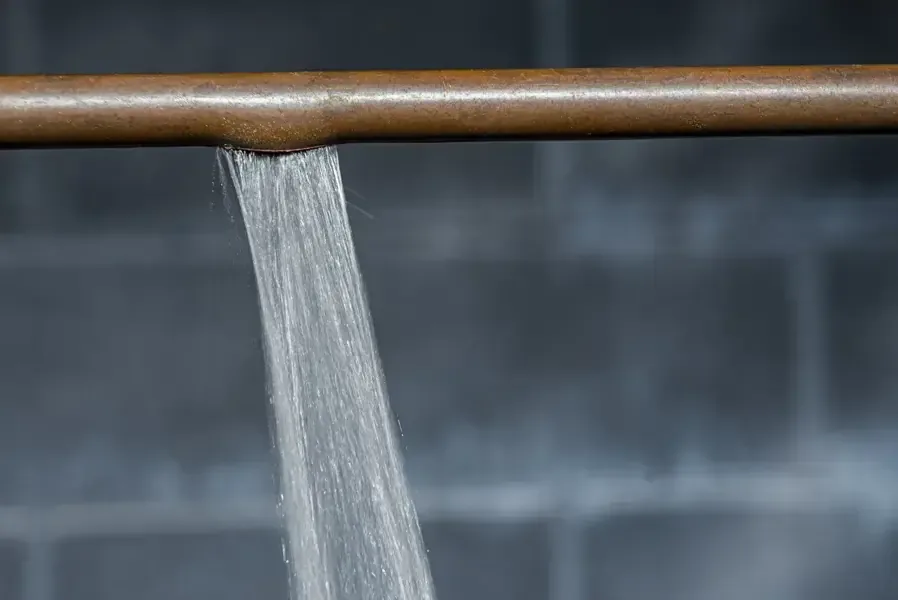
Supply pipes fail at fittings and joints, and the water takes the easiest path: down inside the wall, along the joists, then out through a ceiling or a baseboard. About 46.7 percent of the borough's housing units were built in 1939 or earlier, and about 91.9 percent before 1980, so the age of the plumbing is worth checking after a pipe breaks.
Following the water
Water from a burst pipe rarely stays where it starts. The crew uses a moisture meter and a thermal camera to trace it through wall cavities, ceilings and floors, because a dry-looking surface can hide a soaked bay behind it.
What gets opened
- The wall around the break, cut back past the wet edge
- The ceiling below, when it is stained or sagging
- Insulation that has absorbed water
- Flooring and subfloor where water pooled
Plumbing repair and drying
A plumber repairs or replaces the failed section, and the drying team works around that schedule so cavities are not closed while still damp. After the pipe is fixed, equipment stays until readings show the framing is back to normal.
Cold-weather failures are covered under frozen pipe water damage, and wet ceilings are covered under ceiling leak water damage. Keep the failed section of pipe for the adjuster.