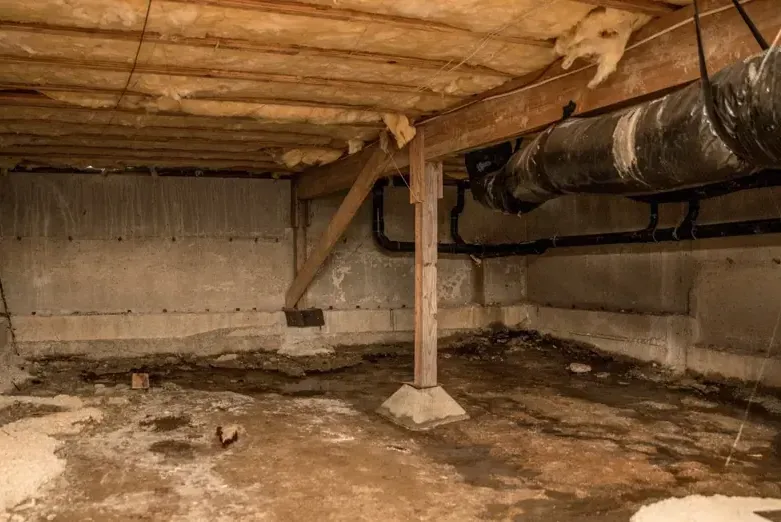
Water under the house

Crawl Space Water Removal in Haddon Heights, NJ

Water under the floor hides from view while it soaks insulation and joists. When a crawl space takes on water from rain or a leaking pipe, the crew pumps it out and dries the framing above.

(888) 471-9821Call about water under the floor
Pump-out of standing water Wet insulation removal Dehumidifier drying
A wet crawl space under a raised-floor home
This loss at a glance
Main jobPump-out and drying
RemovedInsulation, torn barrier
DriedJoists and subfloor
Water sourceRain or a leak
First moves

Crawl Space Water Removal: what to do before the crew arrives

  1. 1
    Find the water source

    Look for a dripping pipe or a failed water heater above, and shut the supply valve if one is leaking.

  2. 2
    Stay out of the space

    Wiring, standing water and tight quarters make the space unsafe for a homeowner.

  3. 3
    Watch the floor above

    Note any soft spots, cupped boards or musty smells and photograph them before cleanup.

  4. 4
    Keep the vents clear

    Leave the vents open so air can move, and skip household fans in wet rooms.

Order of the work

How crawl space water removal is handled in Haddon Heights, NJ

Measure, extract, dry, verify: skipping a step is how hidden moisture ends up sealed inside a wall.

  1. 1

    Trace and stop

    The crew learns whether rain, a pipe or a drain is the source, and that gets stopped first.

  2. 2

    Pump and strip

    A pump clears standing water, then soaked insulation and a ruined barrier are bagged out.

  3. 3

    Treat the framing

    Joists and subfloor are cleaned, with antimicrobial added if the water was not clean.

  4. 4

    Dry and read

    Dehumidifiers and air movers run below the floor until joist readings reach dry values.

Typical cost ranges

What does crawl space water removal cost in Haddon Heights, NJ?

A small clean-water leak under the floor often costs $1,500 to $3,500, soaked insulation and barrier $3,500 to $7,000, and groundwater or sewage $7,000 to $12,000 or more.

Small pipe leak, clean water

$1,500 to $3,500
  • Pump-out
  • Barrier dried or patched
  • Joist readings

Insulation and barrier soaked

$3,500 to $7,000
  • Insulation removal
  • Barrier removal
  • Dehumidifier drying

Groundwater or sewage under the house

$7,000 to $12,000+
  • Category 3 protocol
  • Antimicrobial
  • Extended drying

Ranges move with the water category, the square footage, the material class and how fast drying started. For a planning number, run the water damage cost calculator.

A crawl space is easy to forget until the floor above feels soft or a damp smell rises through the vents. The dry-out below follows the same steps in any house that has space under the floor.

Where the water comes from

Heavy rain can send water across the ground and into the space, and a leaking supply or drain pipe can fill it from above. The first task is learning which one it is, because a plumbing leak must be stopped before anything dries.

How the pump-out and drying go

  • A small pump clears the standing water through the access hatch.
  • Wet fiberglass insulation is pulled down, since it holds water against the floor.
  • A torn or soaked vapor barrier is removed or patched once the ground can dry.
  • Dehumidifiers run under the house while readings track the joists.

Why it should not wait

Wet joists and subfloor stay damp for a long time in a closed space, and that moisture rises into the rooms above. If the water was sewage or came up from a drain, the job follows the sewage backup cleanup protocol instead.

The structural drying page explains the monitoring that confirms the framing is dry.

Service area

Crawl space water removal across the area and nearby towns

Service area around the town

The work reaches homes across the borough that have a crawl space under the floor, with the crew entering through the access hatch and keeping equipment out of the living areas.

The same service nearby: crawl space water removal in Mount Laurel, Audubon, Barrington.

Every water service in this town · every town covered

Questions

Crawl Space Water Removal questions in Haddon Heights, NJ

How can a crawl space flood without anyone noticing?

It is out of sight, so the first signs are usually a soft floor, a musty smell or a spike in humidity indoors. Checking after a heavy storm or a pipe repair catches it earlier.

Does wet insulation have to come out?

Yes in most cases. Fiberglass holds water against the subfloor and loses its value once soaked, so it is removed and replaced after the framing has dried.

What if the vapor barrier is torn?

It is removed or patched once the ground is no longer wet. Putting it back over damp soil traps moisture, so drying comes first and the barrier is repaired afterward.

Is a crawl space flood a sewage emergency?

Not unless a drain or the sewer is the source. Water from a drain is Category 3 and follows containment and disinfecting rules, so the source determines the plan.

Can mold grow under the house?

It can if the framing stays damp for days. Fast pump-out, dehumidifier drying and readings on the joists are what keep that from happening.

Who handles the plumbing repair?

A plumber fixes the leaking pipe, while the restoration crew handles pumping, insulation removal and drying. The two jobs can run in the same visit window.

Water in the house right now

Dry the framing before the floor above suffers

Joists and subfloor stay damp for a long time in a closed space, so quick pumping and steady drying protect the rooms above.

(888) 471-9821Get the pump-out started
(888) 471-9821 flood & leak help