Haddon Avenue is the borough's main business district, with buildings of two to three stories that mix street-level retail and restaurants with space above, and apartment towers such as Park View add residential floors to the picture. Water in a building like that rarely stays in one suite. It drops through ceilings and crosses party walls.
Planning around the business
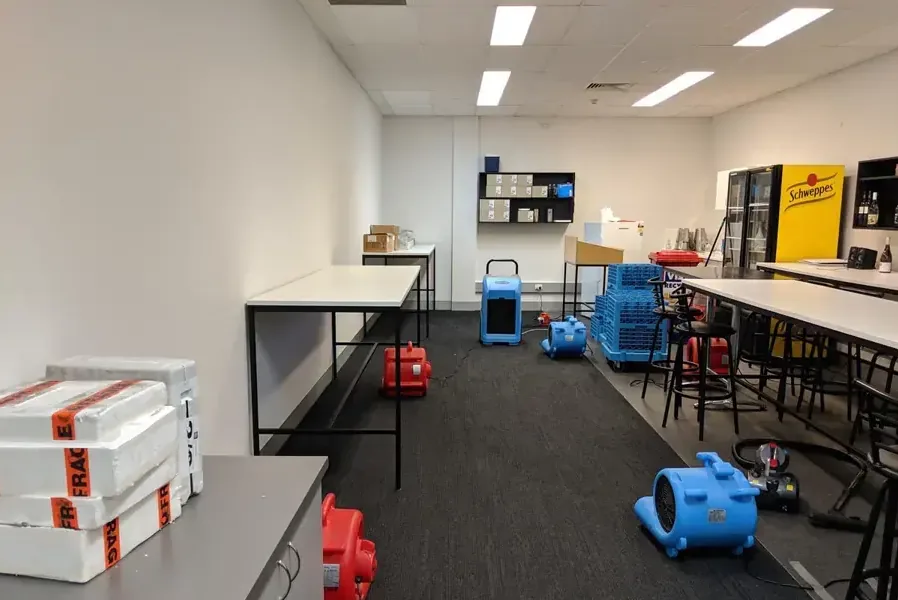
The first call is about operations: which areas can close, which must stay open and where inventory or equipment is at risk. Drying equipment is placed to keep entrances, aisles and work areas clear, and noisy work can be shifted to off hours.
What the crew handles
- Extraction from carpet tile, hard floors and slabs
- Ceiling tile and insulation removal where water came through
- Containment between the work area and open space
- Dehumidification of the whole floor, not just the wet suite
Owners, tenants and insurers
Landlords, tenants and their insurers often need separate answers, so each suite or floor gets its own photos and moisture log. Business interruption questions are for the policy, and the drying record helps show how long each space was affected.
Large losses with soaked structure continue under structural drying, and water entering from above is covered in roof leak water damage. Photos of inventory should be taken before it is moved.