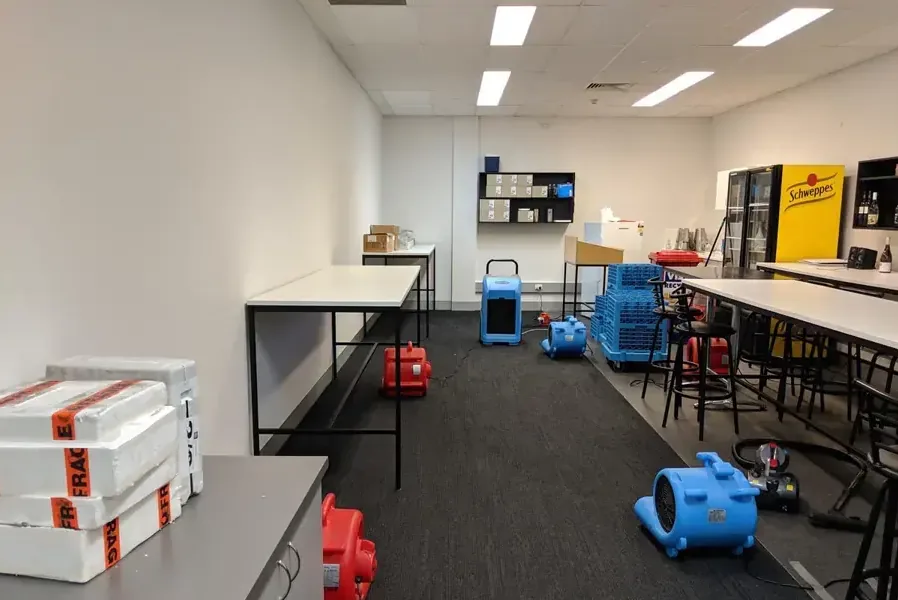
Station Avenue is a two-block main street with restaurants, a grocery, banks, florists, jewelers and dry cleaners, and the White Horse Pike is the borough's professional office district. A leak in either area interrupts a business, not just a floor.
How business losses differ
Commercial spaces have ceiling tile, carpet tile, shared walls and equipment that homes lack. Water also travels farther through a suite or a storefront, so the first job is to map the wet area before anything is removed. Restaurants and dry cleaners add equipment, drains and stock that need protection, so each space gets its own plan.
What the crew does
- Extraction of standing water and lifting of wet carpet tile.
- Removal of ceiling tile and insulation that cannot dry in place.
- Containment to keep the open part of the business clean.
- Drying equipment placed in phases, with after-hours work when needed.
Documenting for the business
Landlords, tenants and insurers each need records. Photos, moisture readings and the drying log are kept for the whole loss, and the same file supports any business interruption claim.
Many losses begin as a burst pipe or a roof leak, and the structural drying method covers the monitoring.