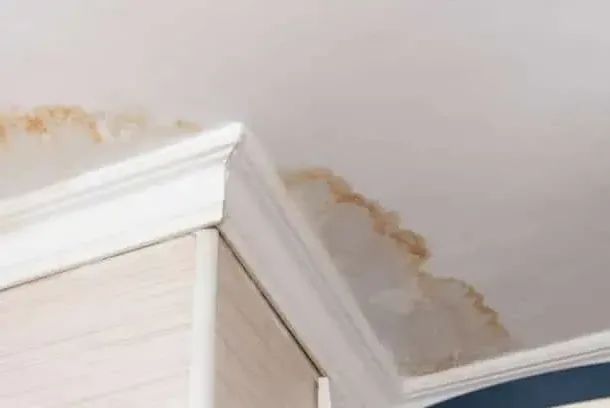
Roof leaks hide. Water enters at a flashing seam, a lifted shingle or a vent, runs along the decking and shows up as a ceiling stain well away from the opening. On January 9 and 10, 2024, a wind and rain storm brought down a utility pole, wires and limbs in the borough, and most of the housing dates to the early decades of the twentieth century, so roofs and exteriors deserve a look after storms.
What the attic shows
Wet insulation, dark decking and stained rafters point to where water came in and how long it has been entering. The crew photographs the attic, then traces the stain through the ceiling to match the opening on the roof.
What comes out
- Insulation that is soaked or matted
- Drywall that has sagged or stained through
- Wall cavity material where water ran down
- Anything that cannot dry in place
Roofer first, then drying
A roofer seals the opening, with a tarp in the short term, so the drying does not start over with the next rain. Dehumidifiers and air movers then dry the ceiling and walls while readings track progress toward normal.
A stain that spreads along a ceiling is covered in ceiling leak water damage, and water that reaches walls and floors is dried under structural drying. Photograph the roof damage for the insurer.