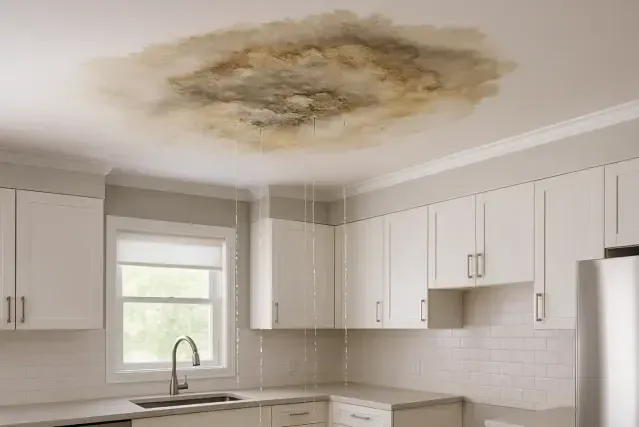
A ceiling stain says water is somewhere above, not where. A roof opening, a bathroom supply pipe, a drain or an upstairs neighbor can each cause it, and the water often travels along framing before it drops. The crew traces the path with meters before cutting.
Many units under one roof
The borough has 437 housing units in two-unit buildings, 77 in buildings with three or four units and about 311 in apartment buildings of 10 or more, so a ceiling stain here often traces to the unit or floor above. That means access, notice and separate records matter.
What the crew does
- Traces the leak with moisture meters and thermal imaging
- Opens sagging or soaked ceiling drywall to release trapped water
- Pulls wet insulation from the joist bay
- Dries the cavity, nearby walls and the floor below
After the ceiling is open
Drywall that held water is replaced once readings are dry, and a finisher handles the repair. A supply pipe source follows burst pipe water damage steps, while a roof source follows roof leak water damage steps.
Photos of the stain before cutting and a drying log afterward make the claim easier for an adjuster to follow. In multi-unit buildings, townhome and condo water damage covers how the units are coordinated.