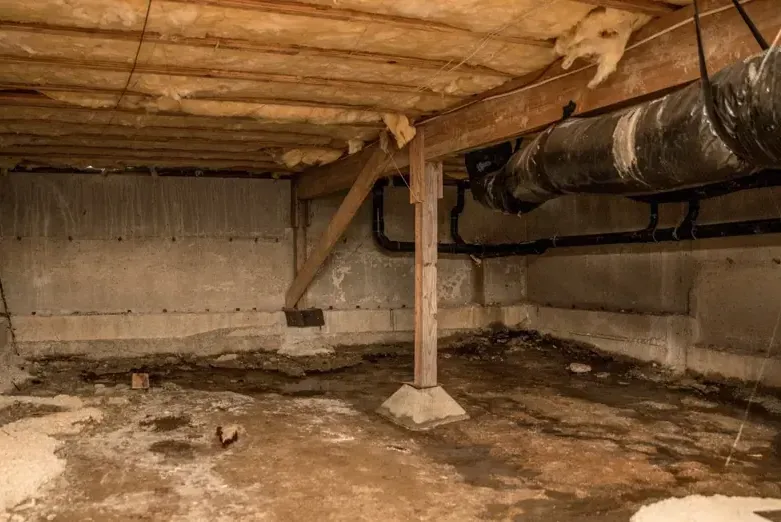
Water under a house is easy to miss, because nothing shows on the floor above until the subfloor swells or a musty smell drifts up. A pipe leak, a failed drain pump or heavy rain can all leave the space wet for weeks without anyone knowing.
What happens under the floor
The crew checks access, moisture readings in the joists and subfloor, and the depth of any standing water. Submersible pumps remove the water, and wet insulation and torn vapor barrier come out because they hold moisture against the wood. Working in a tight space takes protective gear and a plan for where the water goes.
Drying a space you cannot stand in
- Dehumidifiers sized to the space pull moisture out of the air and the wood
- Air movers are aimed at joists and the underside of the subfloor
- Readings on the joists, taken each visit, decide when drying is finished
- Vapor barrier is patched or replaced once the framing is dry
Fixing the cause
Drying only holds if the water stops coming in, so a plumber or drainage contractor deals with the source. If a pipe leak caused it, burst pipe water damage covers the wet walls above, and the crew can document everything for the insurer.
Standing water in a crawl space is a moisture problem that has to be removed and dried before it spreads. See also water extraction for the pump-out stage.