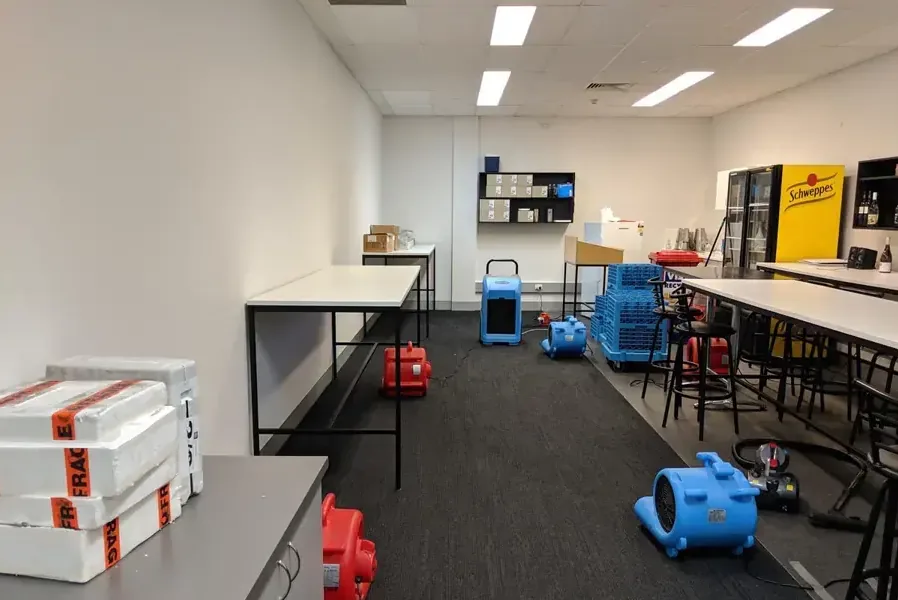
A commercial water loss runs on a clock that homes do not have: inventory, customers and tenants. The restoration team scopes the loss, protects stock and records, and sets a drying plan that fits how the space is used.
Mixed-use ground along Route 73
The Route 73 South Redevelopment Area, a state designated Brownfield Development Area, includes gas stations, automotive repair shops, a weekend outdoor flea market, other commercial uses and vacant land. Mixed uses like these mean service bays, slab floors, storage and open-air stock, each needing its own drying plan.
Food service, schools and institutions
The Sewer Department inspects grease traps and interceptors at retail food establishments, schools and institutions, so a drain backup in those buildings is worth reporting to the department as well as to the restoration team.
What a phased job looks like
- Containment around the wet area so the rest of the space stays usable
- Ceiling tile and carpet tile lifted and replaced by section
- Equipment staged by zone, with after-hours work when needed
- Readings and photos logged for the owner, tenant and insurer
Claims and continuity
Large losses often involve the business interruption part of a policy, so keep invoices and dated photos. Moisture left in the structure after the water is gone is handled under structural drying, and sewage issues under sewage backup cleanup.